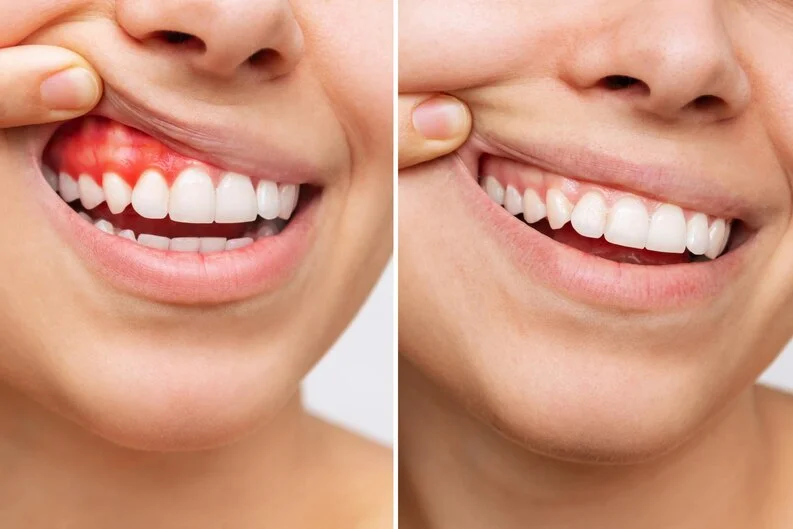
A gummy smile, clinically called excessive gingival display, is when 3–4 mm or more of gum tissue shows above the upper teeth during a smile. It’s genetic in most cases, and it affects more women than men. The cause varies hyperactive lip, excessive gum growth, short teeth, or an overdeveloped jaw and that distinction matters more than people expect because it changes everything about the fix.
According to Dr. Madhuri Khoday, an experienced dentist in Bangalore, A gummy smile is often misread as purely cosmetic, but the cause really does determine the fix — treating lip hyperactivity the same way you’d treat a skeletal issue will not give you the result you’re expecting.
Why Does a Gummy Smile Happen in the First Place?
Four causes, four very different explanations and knowing which one you’re dealing with changes the conversation entirely.
- Hyperactive lip: The upper lip moves higher than it should when you smile, pulling above the gumline and exposing tissue even when the teeth and jaw underneath are fine. It’s a muscle issue, not a structural one, and that matters for treatment.
- Excessive gum tissue: Some people simply grow more gum tissue than others, genetically. It drapes further down over the teeth, makes them look shorter, and there’s no bone or alignment problem behind it just the tissue itself.
- Short teeth: When upper teeth don’t fully emerge during development, they end up looking visually smaller than they are, with gum covering more surface than normal. The teeth aren’t actually short they’re just not fully exposed yet.
- Overdeveloped jaw bone: If the upper jaw grows more vertically than usual, the gumline drops lower across the board. This one tends to need a more involved correction since it’s a structural issue at the root.
If you’ve been unsure which category you fall into, a proper clinical assessment makes it clear fast. Book a gummy smile consultation and you’ll leave knowing exactly what’s going on.
What Treatment Options Are There for a Gummy Smile?
Same-looking smiles, very different causes and yes, that means the treatment your friend had may not be the right one for you.
- Laser gum contouring: When excess tissue is the main problem, a laser trims and reshapes the gumline in one sitting. Recovery is short, sensitivity is mild, and most people don’t find it nearly as uncomfortable as they expected going in.
- Lip repositioning: A small surgical fix that physically restricts how high the lip travels when you smile. It’s the right call when lip muscle activity is the actual issue, not anything to do with your teeth or jaw.
- Crown lengthening: This adjusts both the gum tissue and the bone level to expose more of the natural tooth. It’s done when teeth appear short because of how they erupted, and the results tend to look very natural once healed.
- Braces or jaw surgery: For mild skeletal causes, orthodontics can help move things into better position. But if the jaw has genuinely overgrown significantly, orthognathic surgery is usually the only option that addresses it properly.
Our blog on smile design treatment breaks down how these procedures compare if you want to understand where gummy smile treatment sits in the bigger picture.
Why Choose Aspire Dental Clinic?
Dr. Madhuri Khoday has 14 years across orthodontics, implantology, and smile design including gummy smile cases where soft tissue and bite alignment are both part of the picture, which is more common than it sounds.
What patients consistently mention is the diagnostic conversation itself. Most people come in unsure what’s causing their smile and leave the first appointment with a clear picture of the cause, the options, and what to expect without being steered toward anything prematurely.
FAQ
Showing 3–4 mm or more of gum tissue above the upper teeth when smiling meets the clinical threshold for excessive gingival display.
Laser contouring and crown lengthening offer long-lasting outcomes. Lip repositioning is generally stable but results can shift slightly over years.
Procedures are done under local anaesthesia so discomfort during is minimal. Mild soreness after typically clears within 2–3 days.
Laser contouring is usually one session. Surgical or orthodontic-based corrections are planned across multiple stages.
Refrence
- Etiology and Management of Excessive Gingival Display — PubMed / National Library of Medicine
2. Periodontal Aesthetics and Crown Lengthening Outcomes — Journal of Clinical Periodontology via Wiley Online Library