
What it is:
Malocclusion is a bite problem in which the upper and lower teeth, jaws, or both do not meet in the expected relationship.
When to check:
An orthodontic check is recommended when a problem is first noticed and no later than age 7. A check-up does not automatically mean braces.
Who may need:
Children with crowding, crossbite, underbite, open bite, prominent front teeth, a jaw shift, or habits that are changing the bite.
How it may be treated:
Monitoring, habit correction, space management, jaw expansion, functional appliances, braces, or selected aligner treatment, depending on growth and diagnosis.
Malocclusion Treatment for Children in Seegehalli, Bangalore
A child’s teeth do not always come in a perfect sequence. Gaps may close, front teeth can look uneven for a while, and the jaw keeps changing as the face grows. Malocclusion is different from ordinary transition. It is a bite or alignment problem in which the teeth, jaws, or both. An Indian systematic review and meta-analysis of 54 studies estimated a pooled prevalence of 35.4% among children aged 8 to 15 years.
For parents seeking malocclusion treatment for children in Seegehalli, the first question is not simply whether braces are needed.
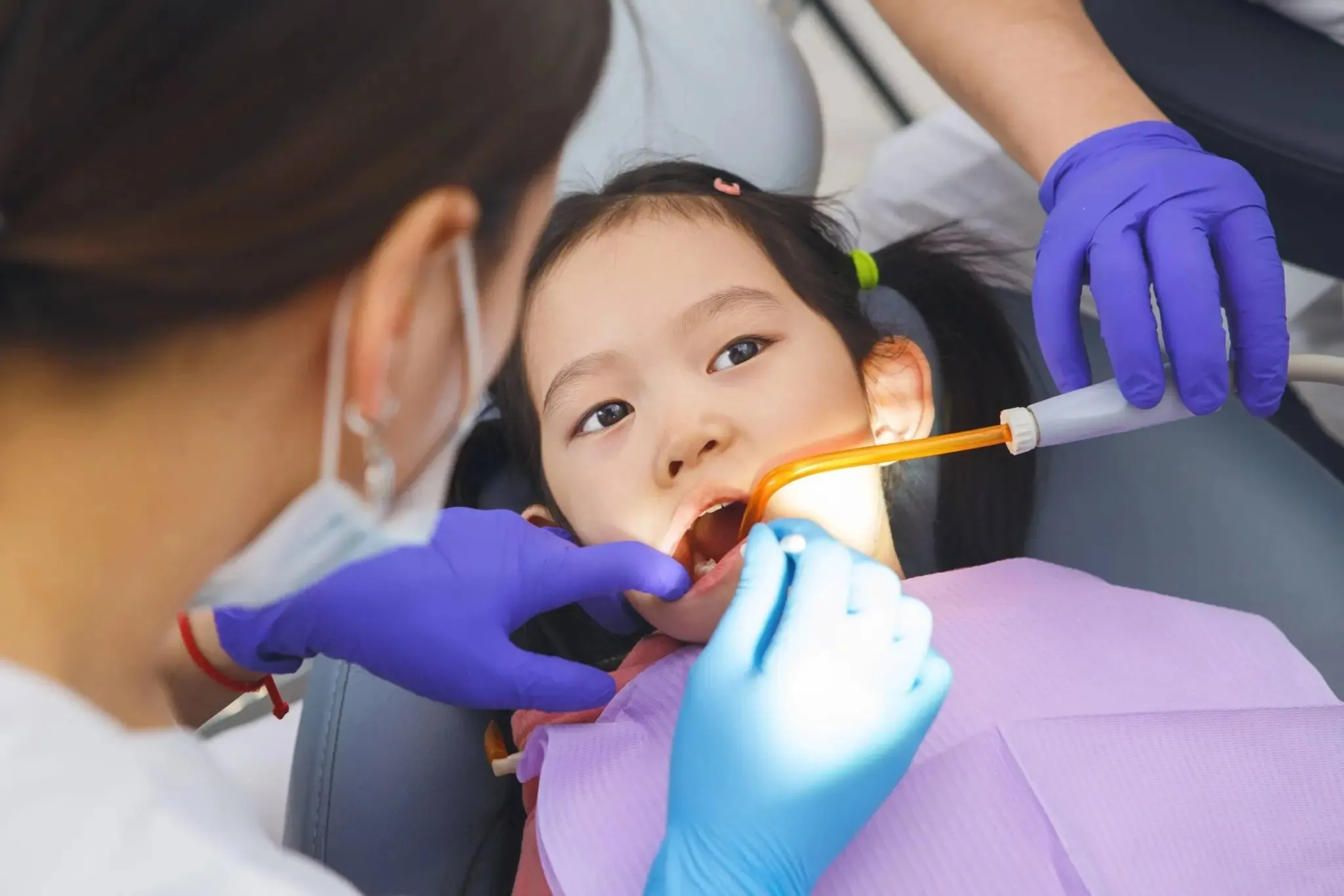
The more important questions are what type of bite problem is there, whether it is affecting function or growth, and whether treatment is better started now or monitored for a later stage.
At Aspire Dental Clinic in Seegehalli, Bangalore, our goal is to provide a child-friendly space where prevention, education, and gentle treatment come together to protect your child’s oral health journey.
INFOGRAPHIC · COMMON BITE ISSUES
Common Orthodontic Problems in Children
Understanding common bite problems can help identify when an orthodontic evaluation may be useful.
01
Crowding
There is not enough room for teeth to line up normally.
02
Crossbite
One or more upper teeth bite inside the lower teeth.
03
Open bite
The upper and lower front teeth do not meet when the child closes the mouth.
04
Overjet
The upper front teeth project further forward than expected.
05
Underbite
The lower front teeth sit ahead of the upper front teeth.
06
Deep bite
The upper front teeth overlap the lower front teeth more than expected.
Early assessment can help identify bite and alignment concerns and determine whether monitoring or orthodontic treatment may be appropriate.
Signs Parents May Notice at Home
Even one persistent bite or jaw concern can justify an assessment
| ✓ Front teeth stick out noticeably Prominent upper front teeth or a large overjet. | ✓ Teeth bite the wrong way around Upper teeth sit inside lower teeth in a crossbite. |
| ✓ Front teeth do not meet An open bite remains when the back teeth are together. | ✓ Lower jaw looks ahead The lower teeth or jaw sit in front of the upper teeth. |
| ✓ Jaw shifts while closing The child moves the jaw sideways to find a comfortable bite. | ✓ Crowding is getting worse Permanent teeth are erupting with too little space. |
| ✓ Chewing or cheek biting is difficult The bite interferes with comfortable function. | ✓ Oral habits are persisting Thumb, finger or pacifier habits appear to be changing tooth or jaw position. |
Not sure whether the bite is normal for your child's age? Book a Child Bite Assessment Today
How Is Malocclusion Diagnosed at Aspire Dental Clinic?
Diagnosis starts with a clinical examination. Records are added only when they will help answer a treatment question.
INFOGRAPHIC · ORTHODONTIC EVALUATION
How We Evaluate Your Child’s Smile
A structured evaluation helps us understand growth, bite development and the right timing for care.
01
History
Dental history, oral habits, previous tooth loss or injury.
02
Growth check
Facial balance, jaw position and symmetry.
03
Bite check
Crowding, crossbite, overjet, open bite and tooth contact.
04
Records if needed
Photographs or digital scans; X-rays only when clinically justified.
05
Treatment plan
Treat now, monitor, or plan treatment for a later growth stage.
Every child develops differently. The recommended approach is based on individual growth, bite and dental needs.
Malocclusion Treatment Options for Children in Seegehalli
Some children need only observation. Others may need a focused first phase before comprehensive orthodontic treatment later.
| Option | When it may be considered | Plain-language purpose |
|---|---|---|
| Monitoring | Mild or changing bite; timing is not yet right for active treatment | Watch eruption and growth so treatment starts only when it is likely to help. |
| Habit correction | Thumb, finger, pacifier or other habits are contributing to the bite | Remove or reduce the pressure that is affecting tooth or jaw position. |
| Space maintenance or regaining | A baby tooth has been lost early or space for permanent teeth is at risk | Preserve or recover room for an erupting permanent tooth. |
| Jaw expansion | Selected crossbites or a narrow upper arch in a growing child | Widen the upper arch when diagnosis shows that growth can be guided. |
| Functional appliances | Selected jaw relationship problems in growing children | Guide tooth and jaw relationships during growth. |
| Braces | Teeth need controlled movement into better alignment | Move teeth gradually with fixed brackets and wires. |
| Clear aligners | Selected older children or teenagers who are suitable and can wear them consistently | Move teeth with a planned series of removable aligners. |
| Selected extractions | Crowding, eruption or space problems where removal fits the overall treatment plan | Create or manage space as part of a carefully planned orthodontic strategy. |
Treatment should fit the child, not a preset age or appliance. Schedule an Assessment
How Malocclusion Treatment Is Planned at Aspire Dental Clinic
A typical pathway may include:
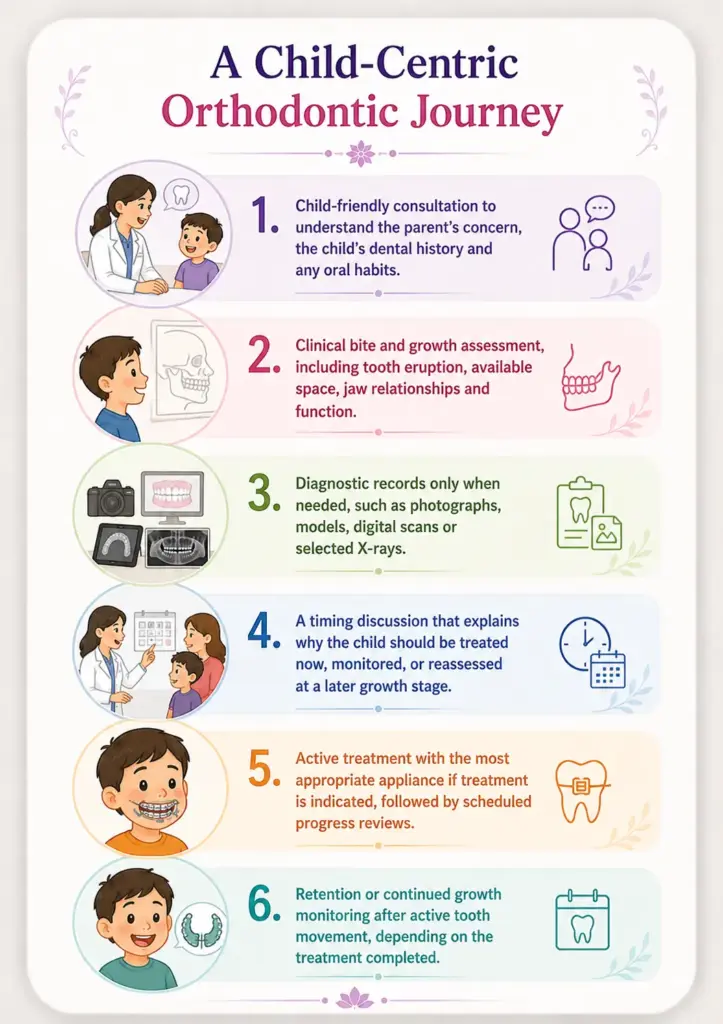
Cost of Malocclusion Treatment for Children in Seegehalli
There is no single price for malocclusion treatment because the treatment plan can range from observation to a short interceptive phase or comprehensive orthodontic treatment. The final estimate is usually based on the diagnosis and appliance required.
Type and severity of the bite problem
Whether treatment is one phase or staged over growth
Type of appliance, such as a space maintainer, expander, functional appliance, braces or selected aligner therapy
Length and complexity of active treatment
Any additional diagnostic records or dental treatment needed before orthodontics [1] [9]
Follow-up and retention requirements
For an individual estimate, you can connect with the clinic
Why Choose Aspire Dental Clinic for a Child's Bite Assessment in Seegehalli?
The strongest reason to choose Aspire Dental Clinic is the availability of child-focused dental care together with orthodontic services when the bite needs specialist alignment or jaw guidance.
Child-Centric Approach:
Our clinic is built around the idea that children thrive in warm, engaging spaces and shouldn’t get scared by the procedure.
Early child braces and bite care:
The clinic's pediatric dentistry department includes early child braces for bite correction during mixed dentition.
Jaw development services:
Aspire Dental has a dedicated jaw development treatment service for children in Seegehalli.
Parents in Seegehalli can arrange a child dental assessment to understand the type of malocclusion. Schedule an assessment today
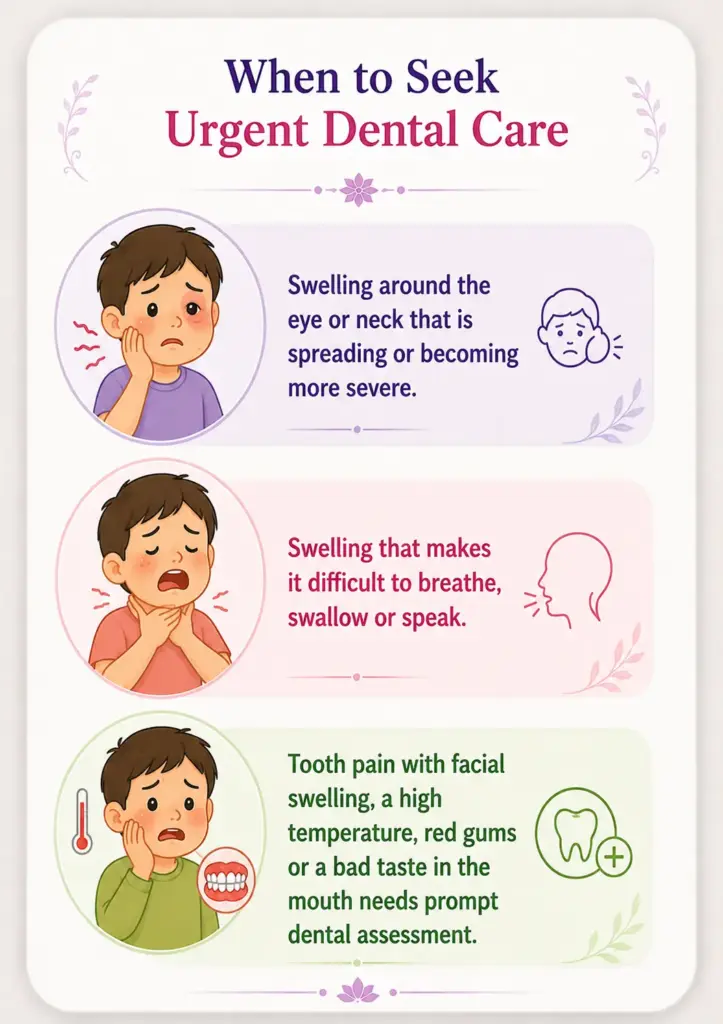
When Does a Child Need Urgent Dental or Medical Review?
Malocclusion itself is usually not an emergency. Urgent care is needed when symptoms suggest infection, significant injury or airway involvement rather than a routine bite problem.
FAQs
No. Some irregularity is part of normal dental development, and some mild bite problems are best monitored. Treatment is recommended when the diagnosis, function, growth pattern or future risk justifies it.
The AAO recommends an orthodontic check when a problem is first noticed and no later than age 7.
Not exactly. Crooked teeth are one form of alignment problem. Malocclusion also includes how the upper and lower teeth meet and how the jaws relate to each other.
Persistent non-nutritive sucking habits can be associated with bite changes such as open bite and crossbite. The effect depends on how long and how frequently the habit continues.
No. Depending on the problem, management may involve monitoring, habit correction, a space maintainer, jaw expansion, another orthodontic appliance, braces, or selected aligner therapy.
Only if the clinical examination shows that imaging will add useful information for diagnosis or treatment planning.
Medical disclaimer: This page is for general education purposes and does not replace an individual dental or orthodontic examination.
References
