
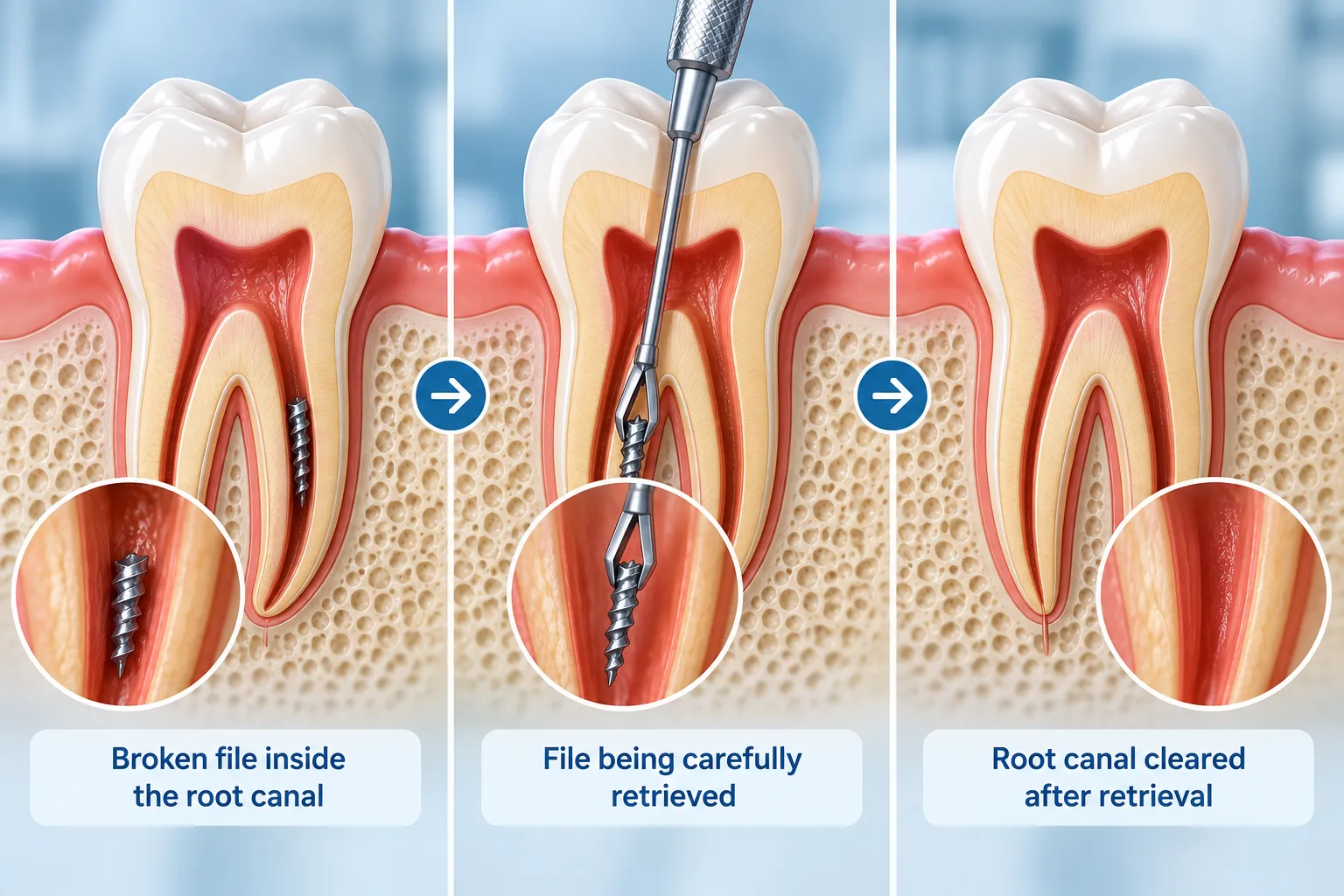
The news that you have a “broken file” in your root canal treatment would probably seem like frightening information at first sight, but, in fact, it occurs quite often and can even be easily fixed. The files required during the process of root canal treatment are very flexible and thin. They are used for cleaning and shaping the canals of the tooth, and sometimes, they can simply break off in the tooth’s canal.
It is necessary to know why it occurred and what it means for your tooth in the future.
What Does a "Broken File" Mean in Root Canal Treatment?
The news that you have a “broken file” in your root canal treatment would probably seem like frightening information at first sight, but, in fact, it occurs quite often and can even be easily fixed. The files required during the process of root canal treatment are very flexible and thin. They are used for cleaning and shaping the canals of the tooth, and sometimes, they can simply break off in the tooth’s canal.
It is necessary to know why it occurred and what it means for your tooth in the future.
It’s a short course of seven clear, removable aligners made just for your teeth. You wear each one for a couple of weeks, and they nudge your teeth into place step by step. They work well for small problems like minor crowding, little gaps, and slightly turned teeth.
However, its presence does not necessarily mean that the therapy was unsuccessful or that the tooth cannot be saved anymore. There are some ways to deal with this issue.
“A separated instrument is one of the known challenges in root canal treatment, especially in canals that are narrow or curved. What matters most is how it’s assessed and managed. With the right diagnostic tools and technique, we can often retrieve the fragment or safely manage the canal so the tooth continues to function normally.” —Dr. Madhuri
Worried About a Root Canal Complication?
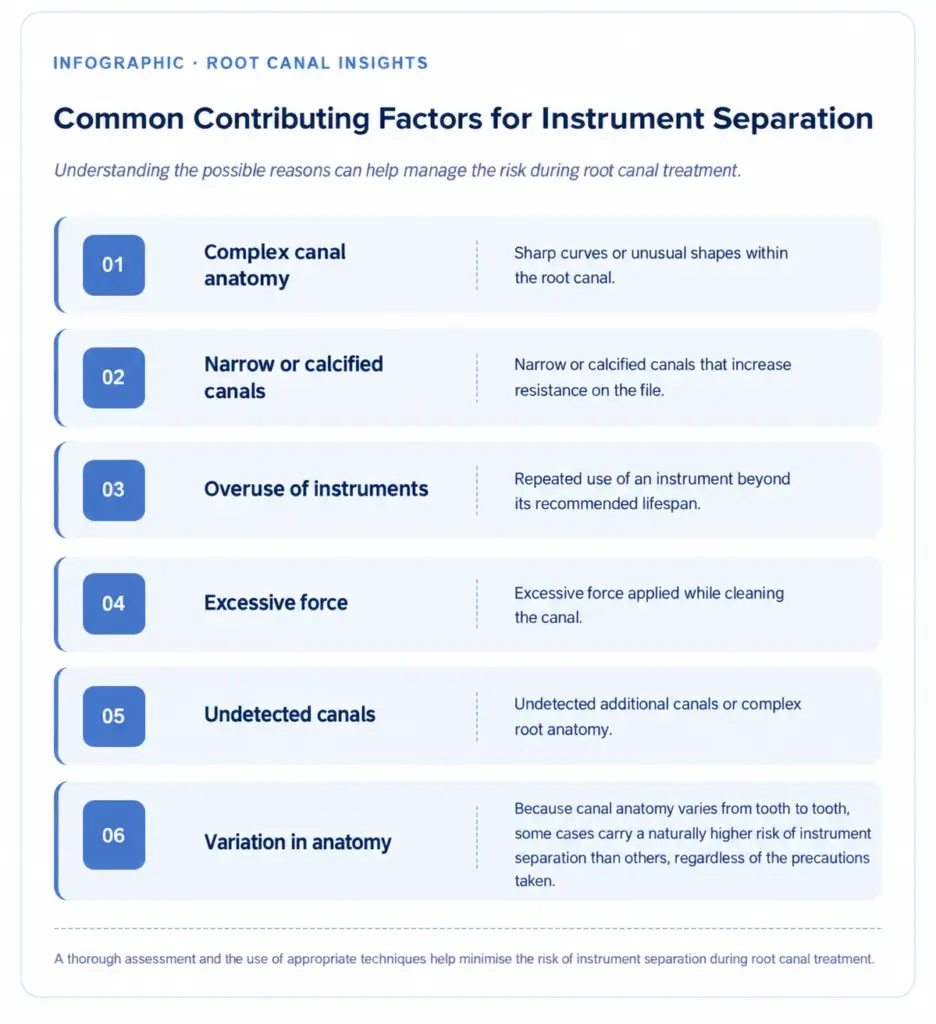
Why Does a File Break During Root Canal Treatment?
There are various causes that may lead to instrument separation during dental procedures. This will help in understanding why the situation arises even for experienced dentists.
How Is a Broken File Detected?
In general, when an instrument is lost, the dentist notices this by actually seeing it happen or by means of tools like the dental operating microscope.
An X-ray or CBCT (cone-beam CT) scan may also be used to confirm:
- The exact location of the fragment within the canal
- The length of canal remaining beyond the fragment
- Whether the fragment is close to or beyond the root’s curvature
Such accurate imaging will help the dentist decide on the best course of action regarding this tooth.
Concerned About What Happens Next?
What Happens If a File Breaks Inside Your Tooth?
Depending on where the fragment is located and how much of the canal has already been cleaned, a dentist may consider a few different approaches.
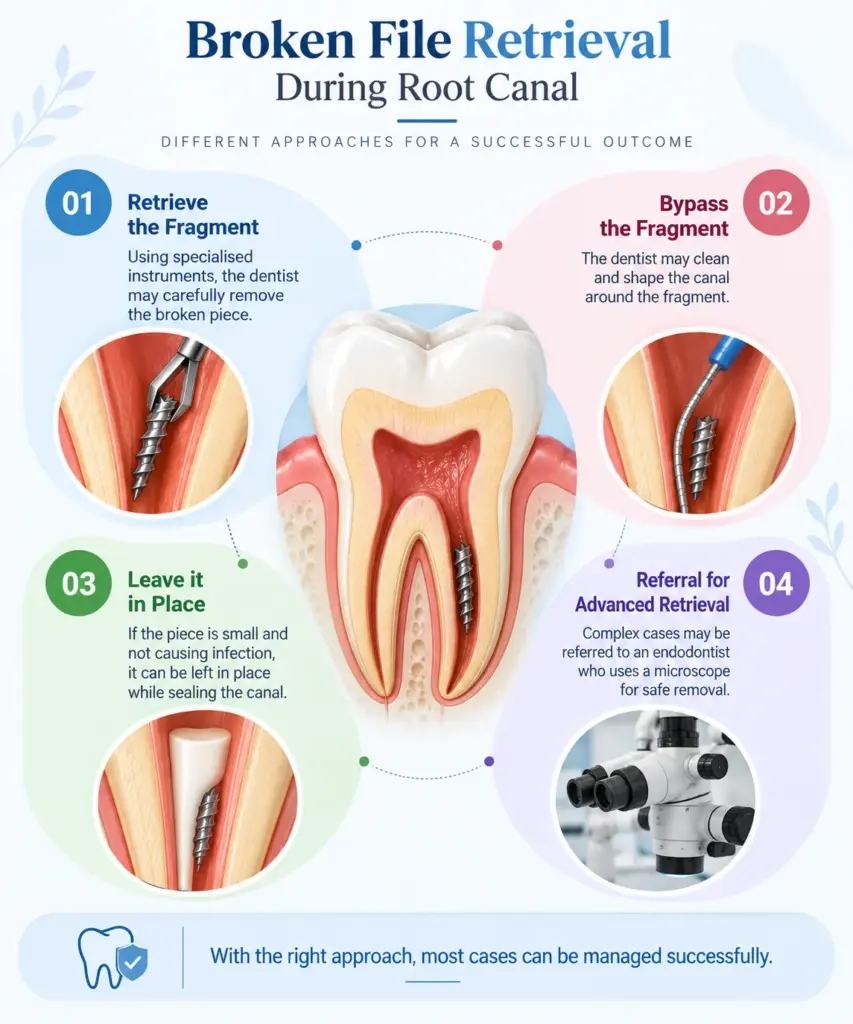
Retrieval of the Fragment
Using specialised microscopic instruments, the dentist may attempt to carefully remove the broken piece from the canal, especially if it is lodged in the upper, more accessible portion.
Bypassing the Fragment
In some cases, the dentist may be able to clean and shape the canal around the fragment, allowing treatment to continue without removing the piece itself.
Leaving the Fragment in Place
In case the piece is small, is found in the depths of the canal, and if there are no signs of infection around it, the piece can be left in place while sealing off the canal. Most separated pieces do not cause any harm after canal disinfection.
Referral for Advanced Retrieval
More complicated cases can be referred to an endodontist who uses special techniques with a microscope to remove instruments safely.
Does a Broken File Affect the Success of Root Canal Treatment?
Some of the factors that may lead to the problem of instrument separation include, but are not limited to, the following: Root canal morphology, instrument factors, and instrumentation techniques, as identified by experts in the International Journal of Oral Science.
A number of issues affect long-term results:
- How much of the canal was disinfected before separation occurred
- The location of the fragment within the root
- Whether there was pre-existing infection at the time of the incident
- How effectively the remaining canal space is sealed
Follow-up through the use of regular X-rays will help in monitoring any signs of healing or complications.
Want a Second Opinion on Your Root Canal?
Signs That May Indicate a Problem After Instrument Separation
Though most instances do not require any difficulty, it is beneficial to know what symptoms might necessitate another visit.
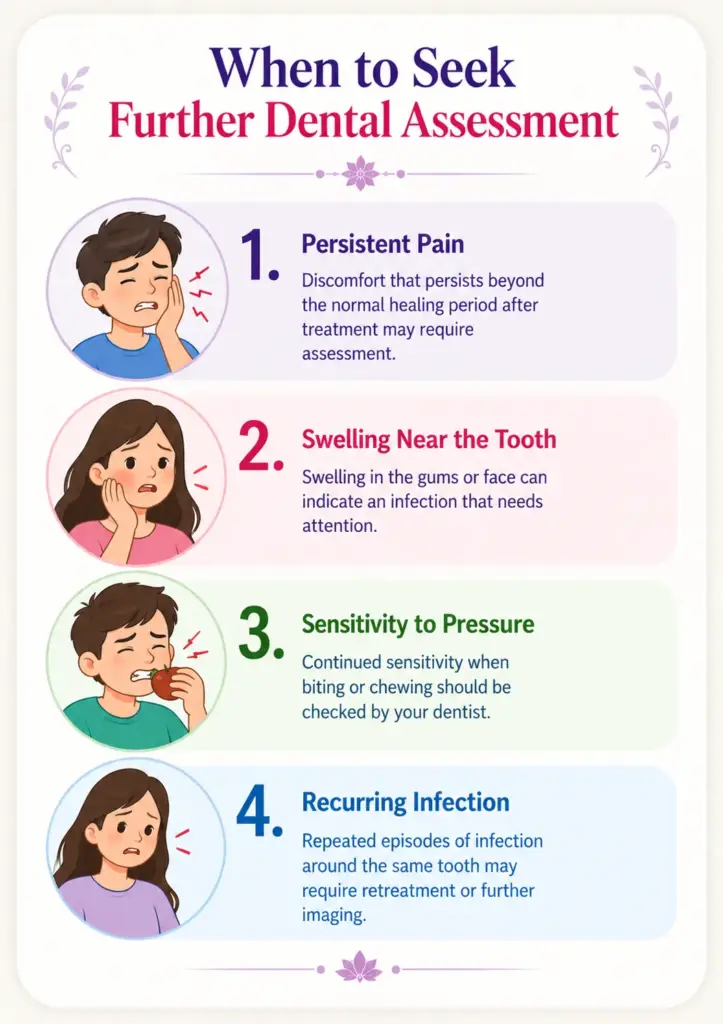
If you notice any of these signs, timely evaluation can help determine whether additional treatment is needed.
How Aspire Dental Clinic Manages Broken File Cases
At Aspire Dental Clinic, treatment through the use of root canal therapy is conducted with the help of the dental microscope, enabling better vision during the difficult process of finding the canals. Such an approach helps both in the prevention and successful handling of cases of instrument separation.
Once the instrument separation occurs, the case is evaluated thoroughly with the help of imaging technology to find out what is the best way to handle it.
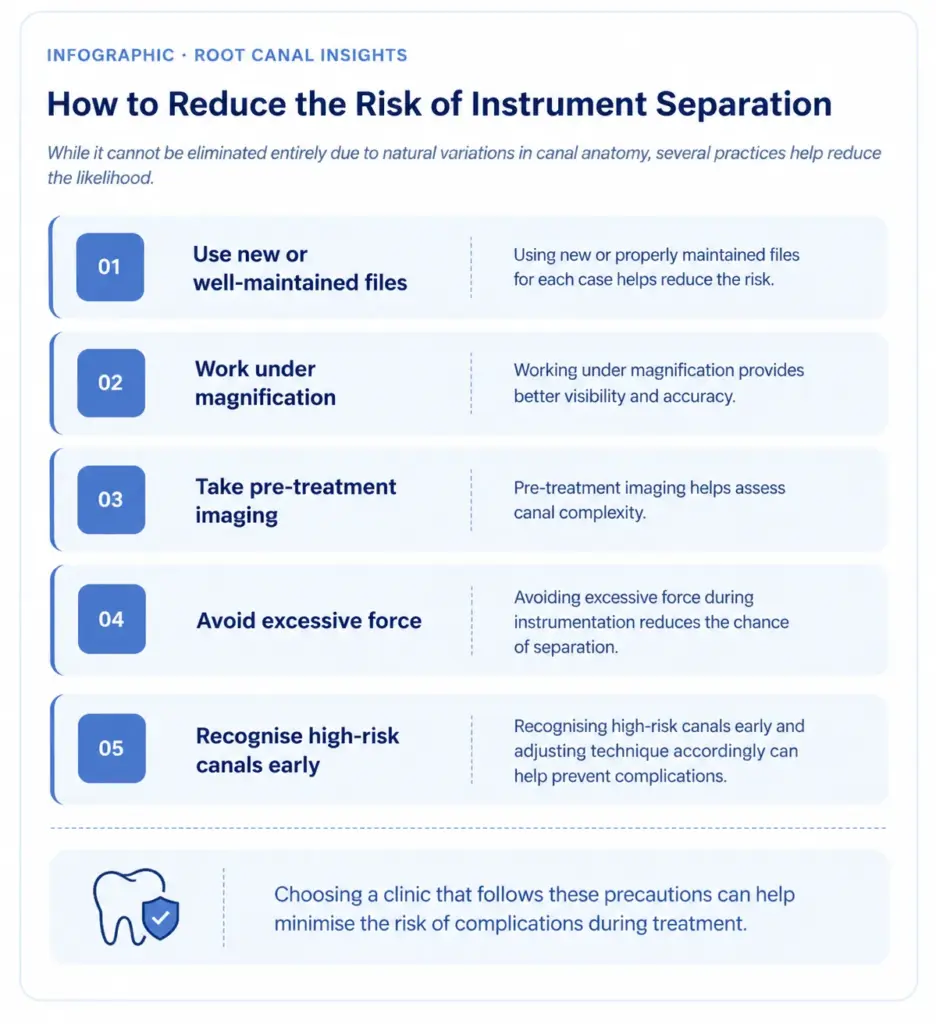
Can Instrument Separation Be Prevented?
Should You Be Worried About a Broken File?
Retention of an instrument in the tooth during endodontic therapy is well-known in dentistry and does not necessarily mean that the treatment was unsuccessful. The most important thing is how the condition is evaluated and managed thereafter. With the help of contemporary technology and expert dental experience, many retained fragments of teeth work successfully for years.
If you were informed that a file broke in your tooth during root canal treatment, the most reassuring step is a comprehensive examination to learn more about your tooth and your way forward.
Have Questions About a Root Canal Complication?
FAQs
Not always. Many cases heal successfully when the canal has already been well-cleaned before the fragment separates.
This does not have to happen because depending on its position, your dentist can either extract the fragment, go around it or keep it inside the tooth cavity.
Yes, it can if the root canal was not properly disinfected before treatment.
The retrieval procedure requires the use of specialised microscopic tools for removing the file.
No, because sometimes it does not cause any problem staying where it is, especially if it is small and located deep within the root canal.
You can try to visit a good clinic that will ensure you have quality equipment and services.