The yellow or stained teeth that are noticed by many parents on their children often lead to questions about whether laser teeth whitening would be an effective solution.
However, the simple answer to how long laser teeth whitening will last for kids is that there isn’t any set timeframe, since whitening is not usually advised for children. This article will explain why, what could be causing the staining in children, and what might be suggested by a paediatric dentist.
Have questions about your child’s tooth colour or oral health?
What Is Laser Teeth Whitening?
The light- or laser-based procedure is carried out in the dental office. This procedure entails the application of a gel that contains peroxide and is activated by light or laser. Laser tooth whitening is advisable for adults whose teeth are fully developed. There is insufficient scientific proof on the effectiveness of light.
Why Is Whitening Generally Not Advised for Young Children?
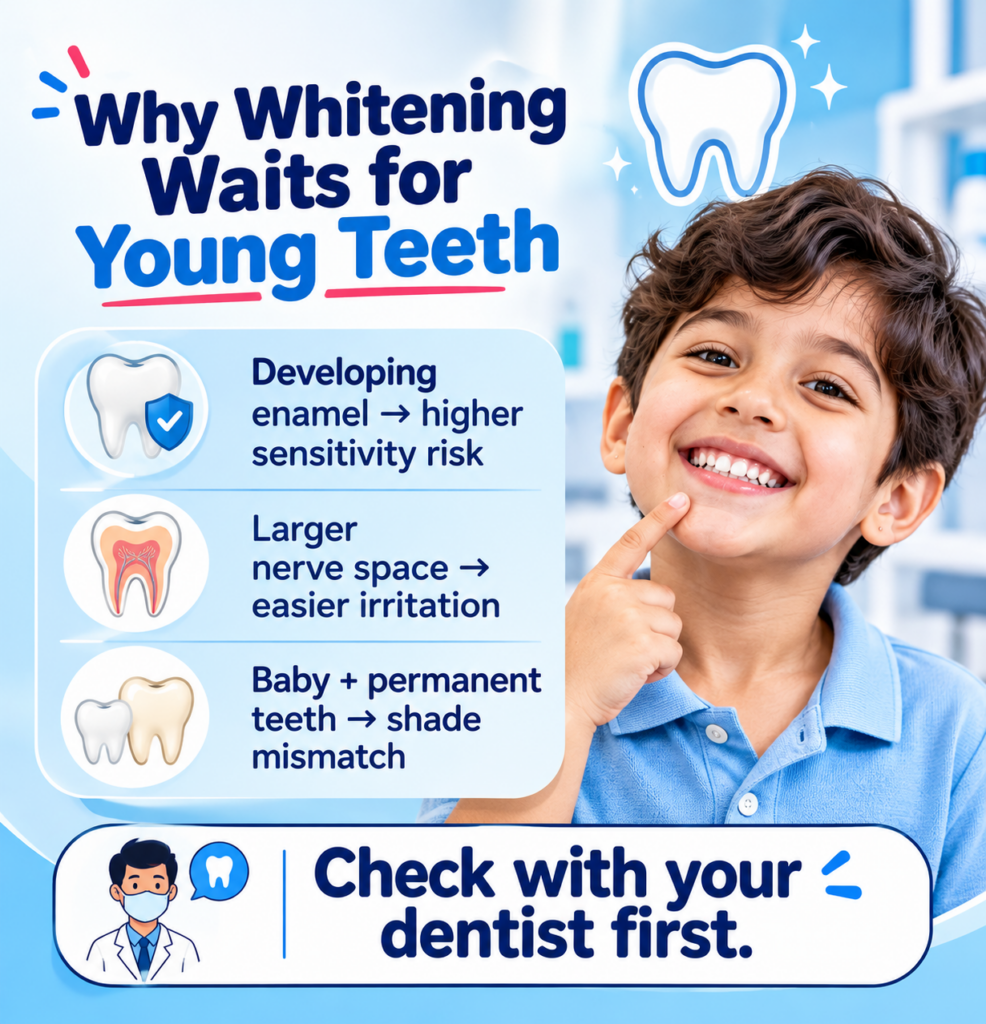
Consequently, tooth whitening is always mentioned in relation to the permanent teeth that have already come in, normally when you reach your teenage years, following a dental exam. The dentist will tell you whether you qualify for it.
How Long Does Whitening Last?
The time for which the results last varies significantly depending on the person and can range from several months to even a few years, depending on the diet, lifestyle, and oral hygiene of the individual. But as far as children are concerned, there is no such number of years, as this process is seldom done to children.
Why Do Some Children’s Teeth Look Yellow or Stained?
In most cases, the cause is not something whitening would fix.
| Cause | What parents may notice | Suggested step |
| Plaque and food or drink stains | Yellow or brown film near the gumline | Better brushing; professional cleaning if advised |
| Enamel defects (e.g., fluorosis, hypoplasia) | White, yellow or brown patches | Dental examination to find the cause |
| Tooth injury | One tooth turning grey, pink or dark after a fall | See a dentist soon |
| Early cavities | Chalky white or brown spots | Dental check-up and timely treatment |
| Some medicines or supplements | Surface staining | Discuss with your doctor and dentist; do not stop medicines on your own |
| Natural shade difference | New permanent teeth look yellower than baby teeth | Usually normal; the dentist can confirm |
Safer Ways to Support a Healthy-Looking Smile
- Brush your teeth two times a day with fluoride toothpaste, which is appropriate for your kid’s age.
- Avoid consuming colored drinks and swish some water in your mouth.
- Regularly undergo check-ups and cleaning.
- Attend to cavities on time, as cavities can lead to discoloration of your teeth.
- Avoid any homemade teeth whitening methods without the dentist’s approval.
Whitening at Different Ages: What Dentists Usually Focus On
Age stage | Teeth status | Usual focus |
2–5 years | Baby teeth | Cavity prevention, fluoride, healthy habits |
6–12 years | Mixed dentition | Cleaning, monitoring eruption, preventive care |
13+ years | Most permanent teeth erupted | Dentist may discuss cosmetic options case by case, after examination |
When Should You See a Dentist?
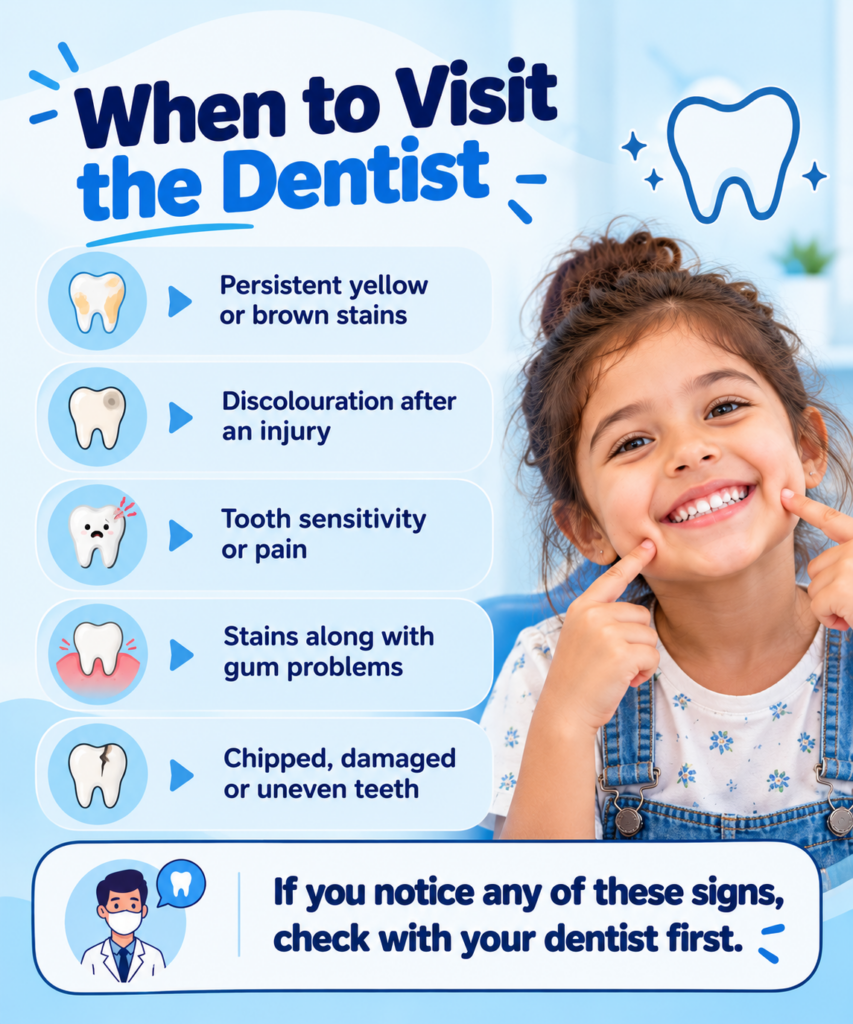
Not sure why your child’s tooth looks different?
What Parents Can Do Next
Laser tooth whitening is not something that is used very often for young kids, so there is no set schedule. Instead, the best thing to do is determine why the tooth is discolored. Information for parents about oral health for kids can also be found on the website of the American Academy of Pediatric Dentistry.
FAQ
FAQ
It is usually not recommended. The dentist will determine after examining the child.
There is no single age. It is usually considered after the permanent teeth have fully erupted, often in the teen years, following an exam.
Permanent teeth tend to be a darker color than baby teeth. This is considered normal.
Food or plaque stains on the teeth can be addressed through dental cleaning, as recommended by your dentist.