Straight teeth aren’t just a teenage milestone. More adults in their 30s, 40s, and beyond are sitting in the orthodontist’s chair today than at any point before — and they’re asking a very specific question: should I go with clear aligners or braces?
It’s a fair question, and the answer isn’t one-size-fits-all. Both options work. Both have real trade-offs. What matters is which one fits your teeth, your schedule, and your life.
Why More Adults Over 30 Are Choosing Orthodontic Treatment
A lot of adults quietly carried misalignment or crowding through their 20s without doing anything about it. By the time they hit 30, the reasons to actually fix it start adding up — gum disease is harder to manage with overlapping teeth, jaw tension becomes more noticeable, and honestly, confidence at work and in social settings matters more than people admit.
Orthodontic treatment in adults has changed too. The options are more discreet, faster in many cases, and far less disruptive to daily life than they used to be. That’s pushed a lot of people off the fence.
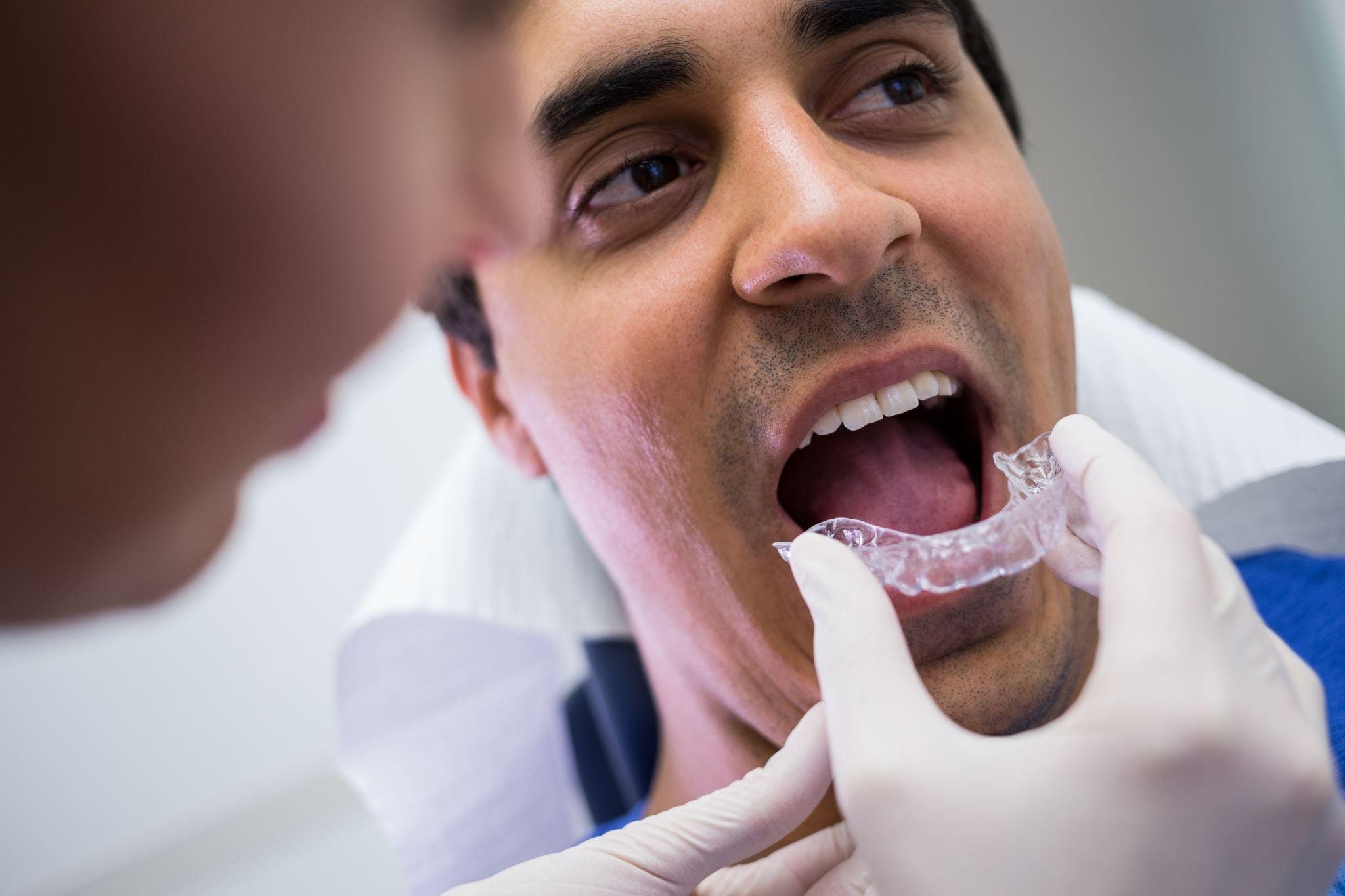
Not sure which category your case falls into? Speak to our orthodontist for an assessment.
Clear Aligners vs Braces: Key Differences
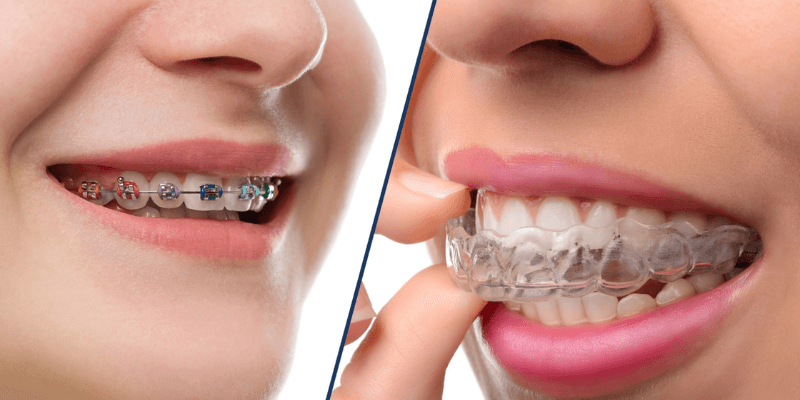
Visibility: Clear aligners win here. They’re nearly undetectable, which matters a lot to adults in professional settings.
Comfort: Aligners tend to cause less irritation to the cheeks and gums. Braces — especially in the first few weeks after adjustments — can be sore.
Compliance: Aligners need to be worn 20 to 22 hours a day. Skip that, and treatment drags on. Braces work whether you’re disciplined or not.
Hygiene: Aligners come out, so brushing and flossing stay completely normal. With braces, cleaning around brackets takes extra effort, and plaque buildup is a real risk if you’re not careful.
Complexity: Braces handle severely crowded teeth, significant bite issues, and rotations better than most aligner systems.
Ready to find out which option suits your teeth? Book a consultation and get a personalised assessment today.
Cost Comparison
Clear aligners cost more than traditional braces in most cases — that’s just the reality. The difference comes down to the brand, the clinic, and how complex your case is.
For patients who can be treated with either option, it really becomes a personal call. Your orthodontist can give you an accurate figure after examining your teeth — costs vary enough by case that any number without a proper assessment is just a rough guess.
Which Option Is Better for Adults Over 30?
For most adults with mild to moderate crowding, spacing, or minor bite issues, clear aligners are a practical, effective choice. The lifestyle fit is better — you can eat what you want, clean your teeth normally, and most people at work won’t even notice you’re in treatment.
That said, adults in their 30s and beyond tend to have denser bone structure than teenagers, which can affect how quickly teeth move. An experienced orthodontist needs to account for this in treatment planning regardless of which system you use.
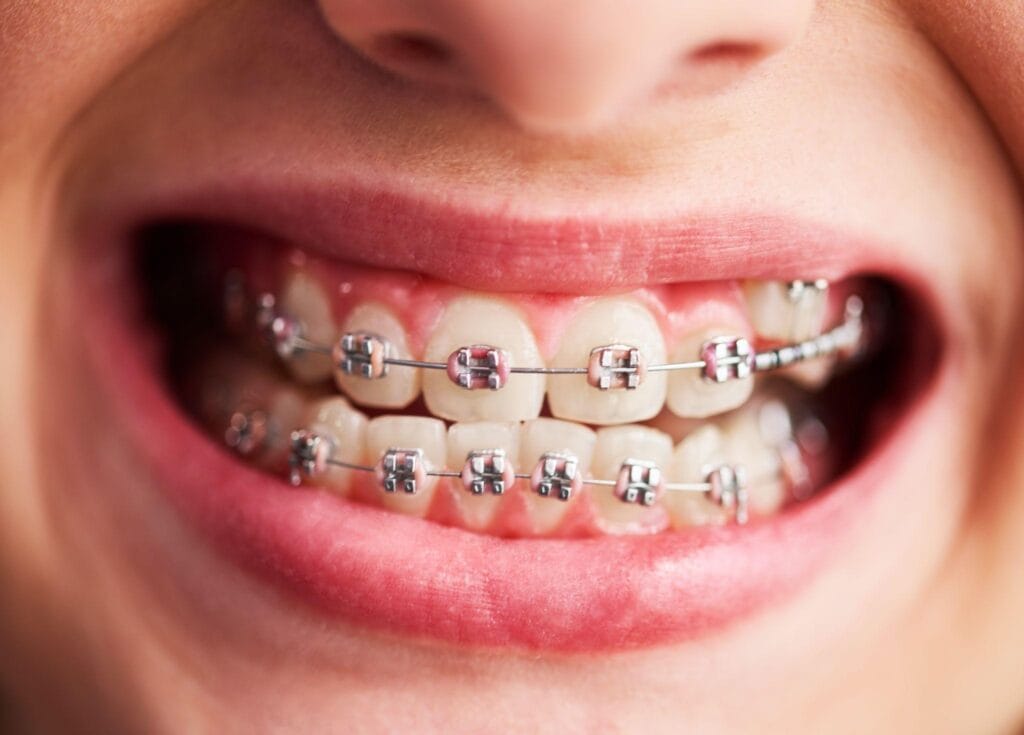
When Braces May Be a Better Choice
Braces make more sense when:
- The misalignment is severe or involves significant bite correction
- Multiple teeth need rotation beyond what aligners typically handle
- Compliance is likely to be inconsistent — braces work without depending on patient discipline
- Budget is a clear constraint and cost difference outweighs the discretion benefit
When Clear Aligners Are a Better Choice
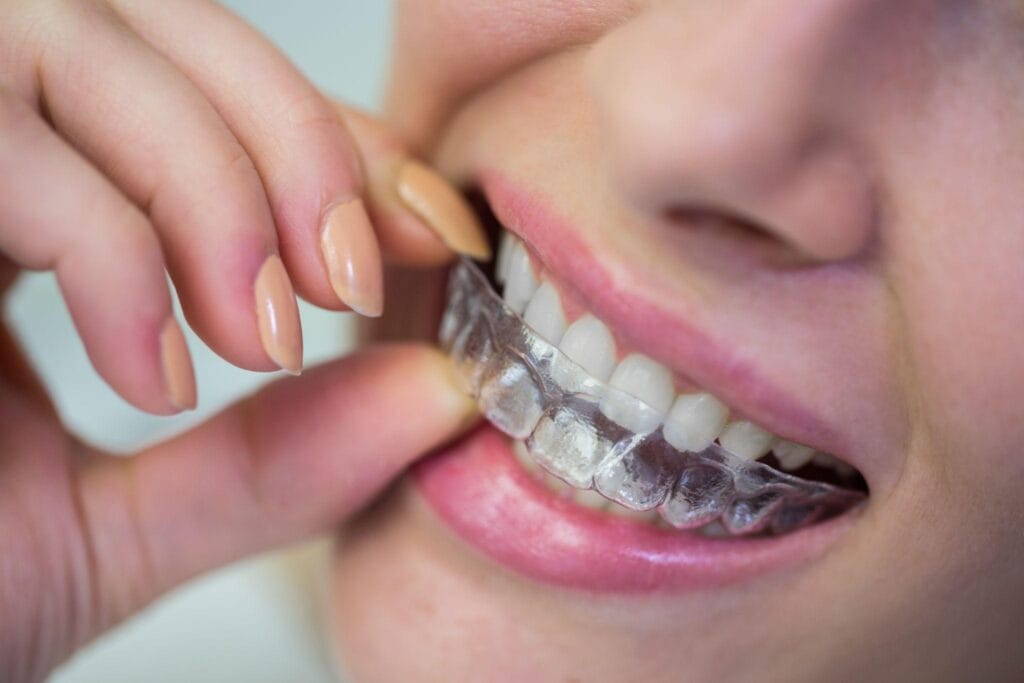
Clear aligners tend to work better when:
- The case involves mild to moderate crowding or spacing
- Appearance during treatment is a priority — especially in client-facing roles
- You have a wedding, major event, or professional milestone coming up and want minimal visibility
- Maintaining your normal oral hygiene routine matters to you
Why Choose Aspire Dental Clinic for Orthodontic Treatment
Aspire Dental Clinic handles both clear aligner and traditional braces treatment for adults. Our focus is on getting the diagnosis right before recommending anything — because a case that looks straightforward sometimes isn’t, and vice versa.
Adults over 30 often come in having already done a lot of research. We work with that. You’ll get a clear picture of what your teeth actually need, what each option realistically involves for your specific case, and what the timeline and costs look like before you commit to anything.
We’ve worked with patients across age groups, and adult orthodontics is genuinely different from treating teenagers. Bone density, gum health, and lifestyle constraints all factor in. That nuance matters, and it shapes how we plan treatment.
Take the first step toward straighter teeth. Schedule your orthodontic consultation today.
Braces are generally more effective for severe crowding, significant bite problems (overbite, underbite), or rotations. Clear aligners handle mild to moderate cases well but may fall short for complex corrections.
Clear aligners are nearly invisible, making them popular for working adults. Metal braces are quite visible, though tooth-colored ceramic braces offer a middle ground.
Aligners are removable — you eat and brush normally, but must wear them 20–22 hours/day, which requires discipline. Braces are fixed, so no removal hassle, but certain foods (hard, sticky) are off-limits and cleaning takes more effort.
Adults generally take slightly longer to see results since jaw bones are fully set. Braces typically run 18–36 months; aligners 12–24 months for suitable cases — though complex adult cases can extend either timeline.