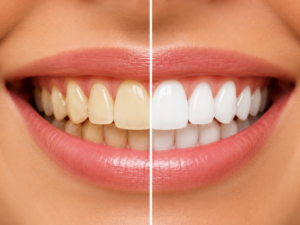
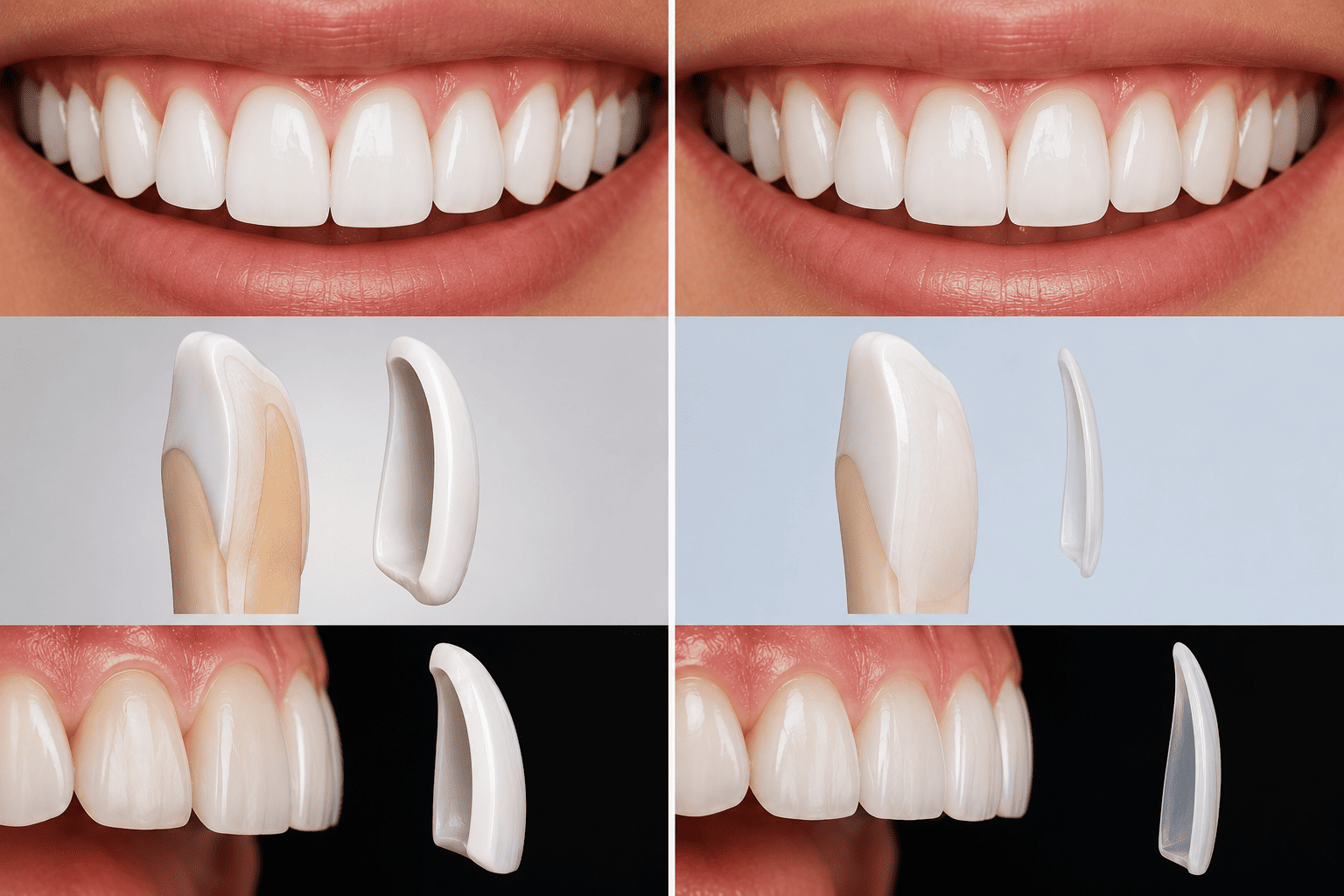
Veneers and laminates are both indicated for correcting front-tooth imperfections, but they differ significantly in thickness, durability, and degree of tooth preparation required. Veneers measure 0.5 to 0.7mm in thickness, last 10 to 15 years, and require permanent enamel reduction that cannot be reversed. They are indicated for heavier corrections, including deep intrinsic staining, chipped incisal edges, and teeth with mild positional irregularities. Laminates measure 0.2 to 0.3mm, preserve nearly all of the natural tooth structure, and remain reversible in most cases because minimal preparation is involved. They are suited for minor corrections such as shade adjustments and small contour modifications where long-term commitment is not preferred.
According to Dr. Darshit Patel, a leading dental clinic in Bangalore, Most patients request veneers initially, but following a clinical enamel assessment, nearly half are better suited for laminates because the required tooth reduction is significantly lower.
What Is the Real Difference Between Veneers and Laminates?
People mix these up all the time. Dentists too, half the time the words get used like they mean the same thing, which they don’t.
- Thickness: Veneers run around 0.5 to 0.7mm and you have to file down a bit of enamel first, but laminates are barely there, 0.2 to 0.3mm, and they usually just bond straight onto the tooth without much shaving at all.
- Prep work: With veneers, numbing is part of the deal because the enamel goes for good, but laminates skip most of that, the tooth stays the way it was, and technically you can go back later if you want.
- Strength: Veneers take a beating. Last 10 to 15 years even if you grind at night. Laminates though, they’re fragile, and they chip if you bite hard things often. Ice, hard nuts, that sort of thing.
- Look: Both pass for real teeth. But laminates have a slightly more see-through finish, which a lot of people actually prefer because it looks closer to a real tooth than veneers do.
Still on the fence? A smile design consultation gives you a clearer answer than any blog ever will.
Who Should Pick Veneers and Who Should Pick Laminates?
Honest answer? Comes down to enamel, bite force, and whether you’re okay with permanent.
- Deep stains: Old tetracycline stains and root canal discolouration usually need veneers, because laminates are just too thin to fully cover the dark shades bleeding through from the tooth itself.
- Small fixes: Tiny chips, slight gaps, shade changes, all of these do well with laminates since the change stays light and the prep stays minimal across the front teeth.
- Sensitive teeth: Got naturally thin enamel? Sensitivity issues? Laminates are kinder, barely any drilling, and the nerve stays untouched through the whole thing.
- Bite trouble: Grinder at night or heavy bite, go veneers, otherwise the laminate edge starts lifting or cracks within a couple of years.
Our blog on smile makeover options walks through how dentists actually plan these cases from scan to final fit.
Why Choose Aspire Dental Clinic?
Dr. Darshit Patel and Dr. Madhuri Khoday lead the cosmetic dentistry team at Aspire Dental Clinic in Seegehalli. Focused work on veneer planning, laminate bonding, full-mouth smile design. Digital shade matching and bite analysis go into every case before any drill comes near the tooth.
What patients keep mentioning is the time spent on shade matching before anything starts. The team runs a dry mock-up on the actual tooth so you see the result first, and that one step alone cuts regret cases down to almost nothing
FAQ
Mostly yes, since little to no enamel is removed during the bonding procedure.
Porcelain veneers typically last 10 to 15 years with proper oral hygiene and care.
A thin enamel layer is removed, so veneers are considered a permanent commitment.
Only mildly crooked teeth, since major alignment issues need orthodontic treatment first.
Refrences
- Dental Veneers Clinical Overview — American Dental Association
- Porcelain Laminate Veneer Longevity Study — PubMed, NIH