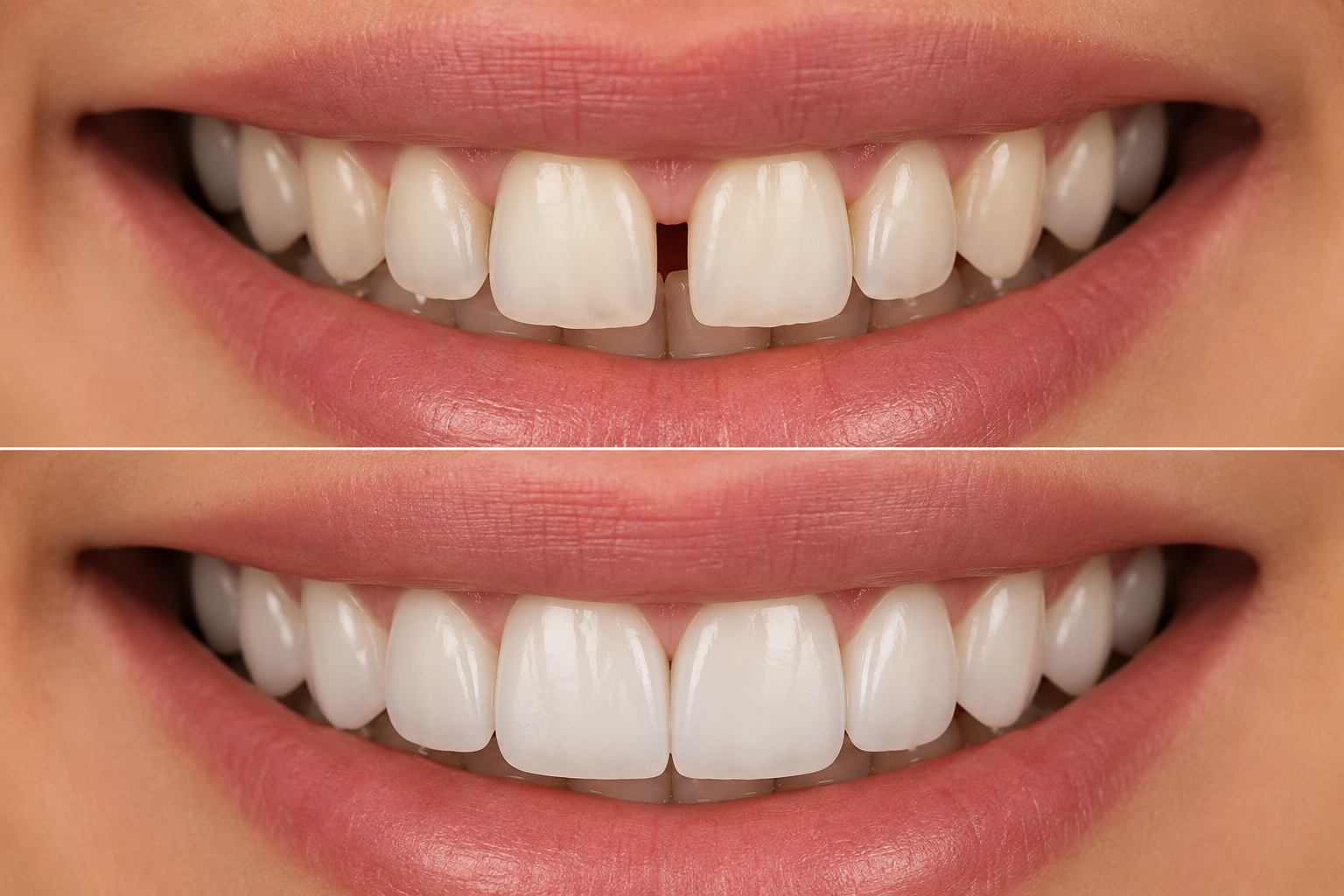
Dental veneers can close gaps between front teeth, but only within a defined size range. A gap smaller than 2 to 3 mm is usually a straightforward candidate for porcelain or composite veneers, where the shell is slightly wider than the underlying tooth and covers the space naturally. Larger gaps, especially those caused by jaw discrepancies or missing teeth, aren’t good veneer territory and they need orthodontic correction or implants first. The condition of the surrounding teeth, gum health, and bite alignment all determine whether veneers are the right fix or just a workaround.
According to Dr. Madhuri Khoday, a specialist at Dental Clinic in Seegehalli, Bangalore, “Veneers close gaps effectively when the tooth structure is sound and the gap is cosmetic in origin, not skeletal, because pushing veneers onto a misaligned bite creates uneven stress that shortens their lifespan.”
What Types of Gaps Do Veneers Actually Correct?
Most diastemas, meaning gaps between the two front upper teeth, respond well to veneers because the size is modest and the surrounding teeth are intact. The approach works by adding width to one or both teeth bordering the gap so the space disappears visually.
- Midline gaps: respond best to veneers because adding even 0.5 to 1 mm of width to both central incisors can fully close a 1 to 2 mm gap without any structural compromise
- Multiple small gaps: across the front six teeth can be addressed with a full arch veneer set, but only when each individual gap is proportional and stacking veneers to hide structural spacing issues often leads to teeth that look bulky
- Post-orthodontic relapse: is a common reason adults seek veneers for gaps that reappeared after braces; veneers here are a valid permanent fix as long as the bite has stabilised
- Gum-recession gaps: near the root area aren’t veneer cases because veneers cover the enamel surface, not the cervical zone, and a periodontist needs to assess those first
Veneers don’t move teeth; they reshape what’s visible. The distinction matters when the root cause of a gap is still active. Smile Designing & Veneers
When Should You Choose Braces or Bonding Over Veneers?
Not every gap is a veneer candidate, and choosing the wrong treatment wastes time and money. A few situations where alternatives outperform veneers.
- Large gaps over 3 mm: typically need Invisalign or braces first because closing them with veneers alone would make the front teeth unnaturally wide and aesthetically off
- Active gum disease: disqualifies veneers entirely; healthy gum tissue is a prerequisite because inflamed or receding gums change how veneers sit on the tooth margin over time
- Bonding as a shortcut: works for minor gaps when you want a reversible, lower-commitment option and composite resin is sculpted directly onto the tooth without any enamel removal, unlike dental veneers
- Teen patients: are rarely ideal veneer candidates because the teeth and jaw are still developing, making bonding or removable appliances the more appropriate short-term choice
So what’s the right call on veneers for gaps? It comes down to three things: gap size, what caused it, and whether your gum tissue is healthy enough to support the result. Dental Veneers vs Laminates
Why Choose Aspire Dental Clinic?
Aspire Dental Clinic is a super-speciality dental centre led by MDS-qualified specialists with over 12 years of clinical experience each. Dr. Darshit Patel holds an MDS in Endodontics and has performed hundreds of full-mouth aesthetic rehabilitations including veneers and laminates; Dr. Madhuri Khoday is a certified Invisalign provider and orthodontics specialist. Together, the team uses digital smile design, intraoral 3D scanning, and composite or porcelain veneer workflows that let patients preview their result before treatment begins.
Patient outcomes here aren’t accidental. Every veneer case at the clinic goes through a mock-up phase where the proposed tooth shape is trialled in the mouth before any enamel is reduced. That step catches mismatches early and produces results patients actually approve of.
Noticing a gap that’s bothered you for years but unsure if veneers are the right call?
FAQ
Yes, a single veneer can close a small gap by widening just one tooth if alignment permits.
Porcelain veneers used for gap closure typically last 10 to 15 years with proper care.
Porcelain veneers need minimal enamel reduction; composite bonding for gaps requires none.
The veneer itself won’t move, but gum recession or bite changes can make the gap reappear.