If your teeth are only slightly out of line, you may not need years of treatment to fix them. For mild cases, a short plan using 7 Invisalign trays can gently move teeth into place over a few months. So what can this small set of clear aligners actually correct?
A 7-tray plan is a focused course meant for minor concerns, like a small gap, a bit of crowding, or teeth that shifted after old braces. The movements are small and easy to predict.
That said, seven is only a starting estimate. The real number is decided after an exam, a bite check, and a digital scan, because no two smiles are the same.
At Aspire Dental Clinic, Seegehalli, Bangalore, every aligner plan is mapped out after a full orthodontic check, so your teeth move safely, and the result holds.
Doctor’s Quote:
“Patients with mild crowding, small gaps, or slight shifting after braces are often good candidates for a short aligner plan. We always confirm it with a clinical exam and digital scan first,” says Dr. Madhuri Khoday, BDS, MDS (Orthodontics & Dentofacial Orthopedics), Certified Invisalign Provider (USA), with 12+ years of experience in Seegehalli, Bangalore.
What are 7 Invisalign trays?

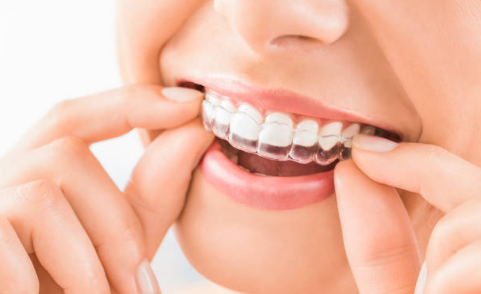
It’s a short course of seven clear, removable aligners made just for your teeth. You wear each one for a couple of weeks, and they nudge your teeth into place step by step. They work well for small problems like minor crowding, little gaps, and slightly turned teeth.
Which dental problems can a short aligner plan fix?
This kind of plan suits simple cases where teeth only need to move a little. Here’s what it handles well.
Mild crowding
When teeth overlap a bit because there isn't quite enough room, the aligners ease them apart. Straighter teeth are also easier to clean, so less plaque builds up.
Small gaps
A little space between teeth doesn't usually cause problems, but it can bother you when you smile. A short plan closes those gaps slowly and evenly.
Shifting after braces
Teeth sometimes drift back after braces, especially if you stopped wearing your retainer. A short aligner course can guide them back. This is common if you had Damon braces a while ago.
Slightly turned front teeth
Minor twists in the front teeth often respond well, as long as the turn isn't severe. The aligners rotate them gently, no drilling or wires needed.
How much do 7 Invisalign trays cost?
Cost is usually the first question, and the honest answer is that it depends on your case. A short plan costs less than full treatment because there are fewer aligners and shorter visits. Here’s a rough idea of how pricing tends to vary.
| What you're fixing | Typical aligner range | Approximate cost range |
|---|---|---|
| One small gap or slight turn | Up to 7 trays | ₹40,000 – ₹70,000 |
| Mild crowding or a few small gaps | 7 to 14 trays | ₹70,000 – ₹1,20,000 |
| Minor shifting after old braces | 7 to 10 trays | ₹50,000 – ₹90,000 |
These are general ranges for short, mild cases, not a fixed quote. Your actual price depends on three things:
How tricky your case is
Closing one small gap is simpler than fixing a gap and a twist together.
How many aligners you actually need
Seven is a guess until the scan confirms it.
Scans and retainers
Your digital scan and the retainer you wear afterwards are usually part of the plan.
Because every mouth is different, a scan gives you an exact figure instead of a vague range. And there are no hidden charges; you’ll see the full plan before anything starts.
Short Invisalign vs full treatment: what's the difference?
A short plan fixes small, mostly cosmetic issues. Full treatment is for bigger, more complex bite problems.
A short aligner plan works for:
Mild crowding
Small gaps
Minor turned teeth
Full treatment is needed for:
Heavy crowding with no space
Deep bite or open bite
Crossbite where the jaw is off
Wide gaps across several teeth
Bite problems that affect how you chew
In short, a quick plan tidies up minor things. Full treatment fixes how your teeth actually work together and keeps them stable long term.
Am I a good candidate for a short aligner plan?
It comes down to a proper check, not just the number of trays.
Your dentist looks at:
How crowded or spaced your teeth are
How your upper and lower teeth meet
The health of your gums and bone
How far your teeth need to move
A 3D scan shows exactly where your teeth sit and maps out each step. From there, your orthodontist decides whether a short plan is enough or you’d do better with a longer one.
Good to know: Picking the right cases is what keeps results steady, so your teeth don’t slip back later.
How long does treatment take?
Most short plans take about 2 to 4 months. The exact time depends on how much your teeth need to move and how consistently you wear the aligners. Twenty-two hours a day is the sweet spot.
When should you see a dentist about straightening?

The sooner you check small changes, the simpler the fix tends to be.
Teeth starting to overlap. If they look crowded or are getting hard to clean, it’s worth a look before it gets worse.
A gap that’s growing. Small spaces can widen over time and affect your bite, not just your smile.
An uneven or uncomfortable bite. If chewing feels off or your jaw aches, your alignment may be the reason.
Slipping after braces. Teeth wander back without a retainer, and catching it early saves trouble.
FAQs
For mild crowding, small gaps, or minor shifting, yes. Bigger problems need a longer plan.
Mild crowding, small gaps, slight turns, and minor shifting after old braces.
Full treatment can take anywhere from 20 to 60 or more, depending on the case.
Yes, a short plan closes minor gaps gradually with gentle, controlled movement.
They do, as long as you wear your retainer as advised after treatment.