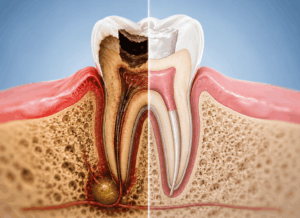
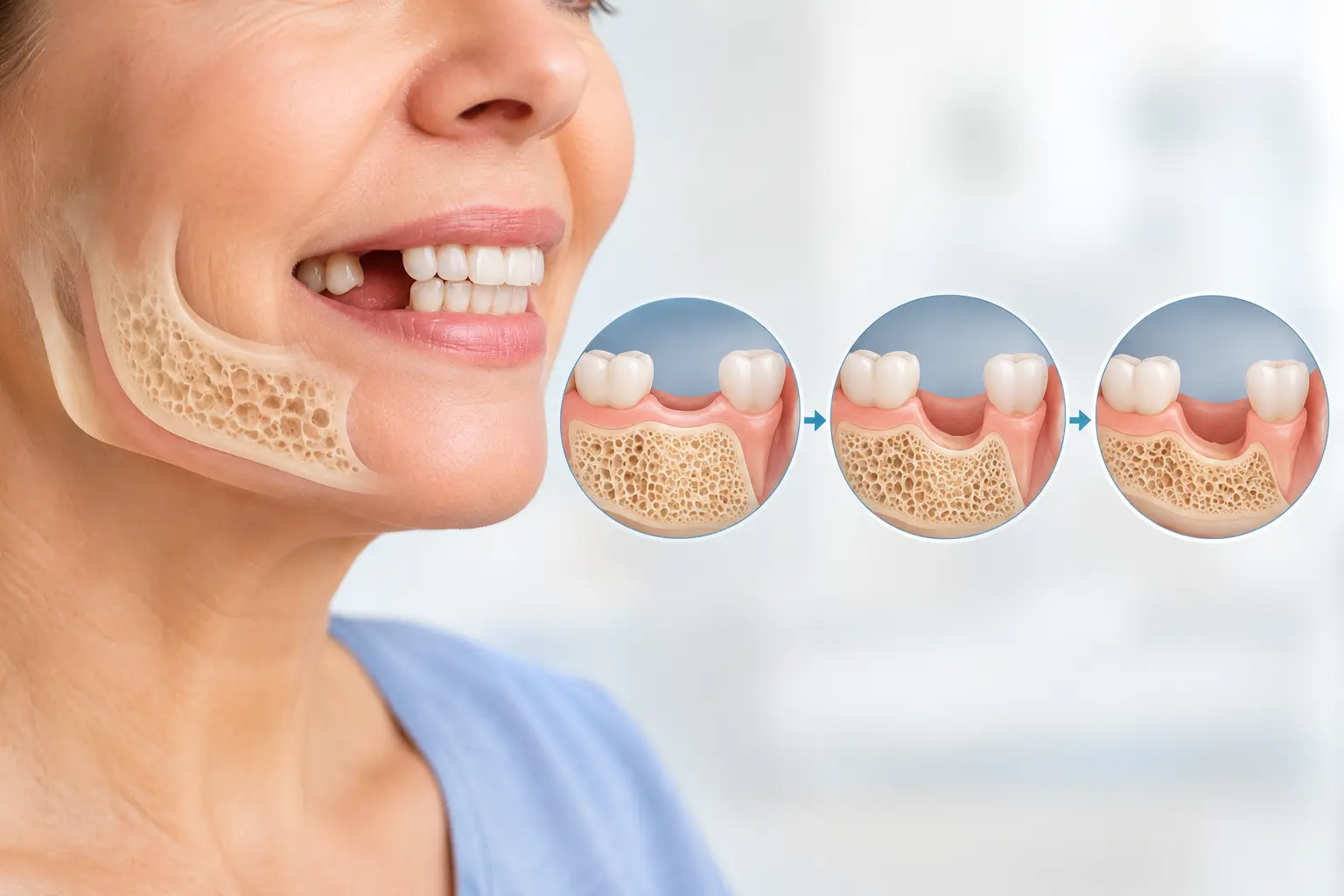
The jawbone starts breaking down the moment a tooth goes missing. It depends on root pressure to stay dense and once that’s removed, resorption sets in within months. The jaw narrows over time, face shape shifts, and neighbouring teeth drift into the gap. Not a cosmetic problem. A structural one.
According to Dr. Madhuri Khoday, dental clinic in Bangalore, “bone loss after tooth loss is largely silent in the early stages and most patients only notice it once neighbouring teeth start shifting or the jaw looks visibly sunken.”
Why Does the Jaw Lose Bone After Tooth Loss?
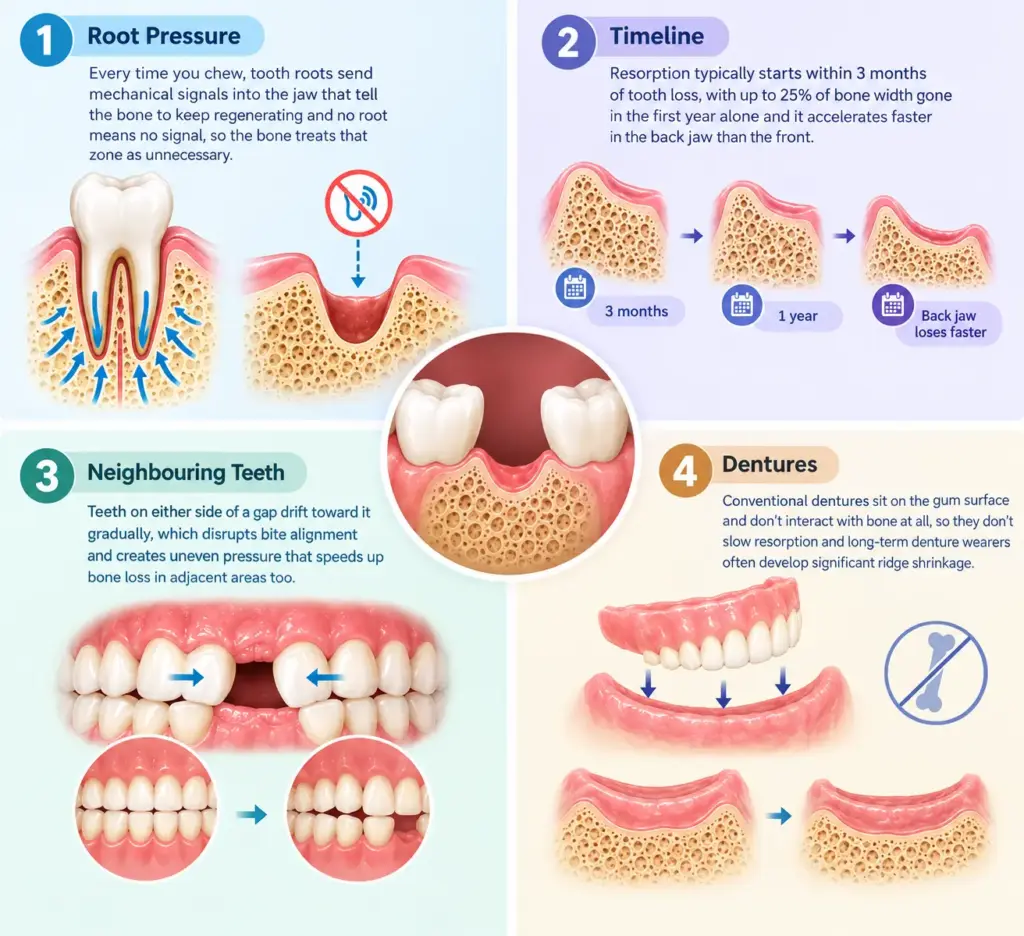
Bone loss compounds quietly, and by the time patients notice the jaw looks different, significant resorption has already occurred. Getting dental implants placed early is the most effective way to preserve what bone remains.
How Do Dental Implants Prevent Jaw Bone Loss?
Implants are the only tooth replacement option that directly addresses bone resorption, not just the visible gap.
- Titanium Root: An implant post is placed directly into the jawbone, mimicking the function of a natural root and restarting the mechanical stimulation that keeps bone density intact.
- Osseointegration: Over 3 to 6 months, the bone fuses around the implant in a process called osseointegration and after this, the implant is as stable as a natural tooth root and continues stimulating the jaw with every bite.
- Bone Grafting: If too much bone has already been lost before implant placement, a bone graft procedure can rebuild the ridge to create enough volume to anchor the implant securely.
- Long-Term Outcomes: Studies show patients with implants retain significantly more jaw volume over 10 years compared to those with dentures or no replacement and the difference in facial structure is measurable.
The closing case for implants isn’t aesthetic. It’s anatomical. Bone that isn’t stimulated disappears, and implants are the only reliable way to stop that. Modern diagnostic tools like 3D intraoral scanning now make it easier to assess bone condition accurately before any procedure begins.
Why Choose Aspire Dental Clinic?
Dr. Madhuri Khoday and the team at Aspire Dental Clinic bring years of hands-on experience across implant placement, bone grafting, and oral surgery. Guided implant surgery protocols are followed here, so every placement is digitally planned beforehand and the margin for error is far smaller than with conventional methods.
Patients here don’t get a one-size approach. Bone volume is assessed, grafting needs are identified early, and implant timelines are set based on actual anatomy, not convenience.
Noticed shifting teeth or a hollow look around an old extraction site?
FAQ
Yes, resorption is painless in early stages and progresses without any discomfort.
Even a single missing tooth causes localised bone loss in that area over time.
No, jawbone doesn’t regenerate without intervention and grafting or implants are needed.
Not always. It depends on how much bone remains at the implant site after assessment.