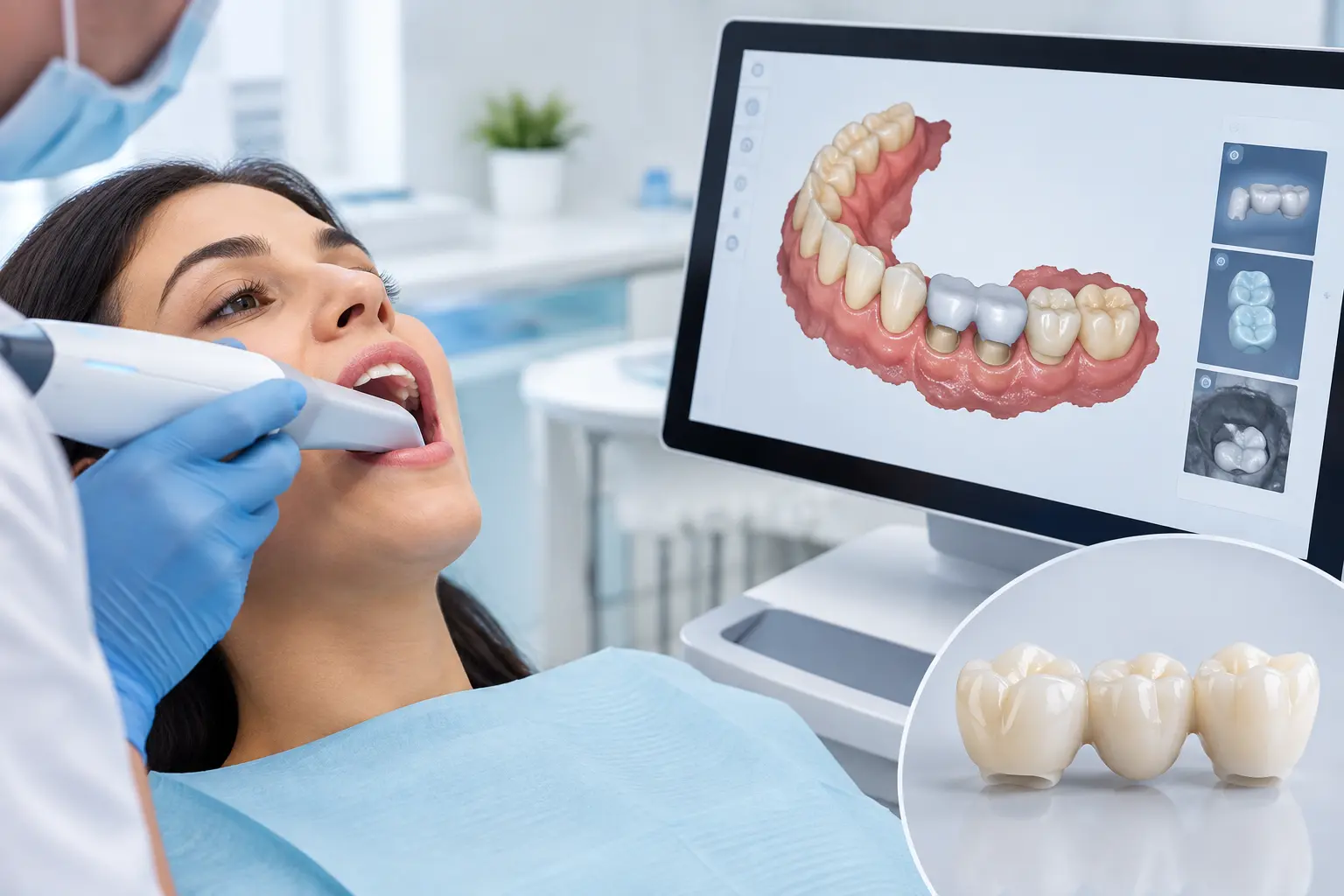
3D intraoral scanning replaces conventional putty impressions with real-time digital capture of tooth geometry, giving dental labs exact data to fabricate crowns and bridges with tighter margins and fewer fitting errors. The scanner moves around the prepared tooth and surrounding arch, stitching hundreds of images into a single accurate 3D model in minutes. Traditional impressions distort during removal, expand or contract with temperature, and introduce lab-side errors digital scanning eliminates most of that chain.
According to Dr. Madhuri Khoday, dental clinic in Bangalore, “A well-captured intraoral scan gives the lab a margin line that’s measurably more consistent than anything a putty impression can reliably produce.”
How Does a Digital Scan Actually Work for Crown Preparation?
The scanner captures prepared tooth structure and adjacent teeth simultaneously, so the lab sees the full occlusal picture from day one.
- Capture speed: Most single-crown scans complete in under 8 minutes, meaning the patient spends less time with anything in their mouth and the dentist gets a usable model before the appointment ends.
- Margin accuracy: Digital files preserve the exact sub-gingival margin geometry without the tearing or voids that frequently compromise putty impressions, and the lab can rotate and zoom into the model to catch any issue before milling begins.
- Occlusal mapping: The scanner records the opposing arch and bite registration in the same workflow, so the lab doesn’t have to guess at the vertical dimension it’s baked into the file from the start.
- Immediate review: Both dentist and patient can see the 3D model on-screen right after scanning, making it easier to flag any under-preparation or tissue interference before the case is sent to the lab.
So the lab gets a file, not a box of trays and hope. Fewer phone calls, fewer remakes — and for patients exploring dental implants in Bangalore, that kind of precision at every handoff is exactly what determines how well the final restoration seats.
What Makes Digital Scanning Better for Multi-Unit Bridge Cases?
Bridge cases are where traditional impressions fail most visibly long spans distort, abutment registration shifts, and even a half-millimetre error means a remake. Digital scanning holds geometry across the full arch.
- Span accuracy: On a three-unit or longer bridge, the scan file captures all abutment positions in a single continuous model, something putty can’t do without risking distortion across the edentulous gap area.
- Soft tissue detail: Modern scanners distinguish between the prepared margin and adjacent gingival tissue with enough clarity that the lab can design a pontic that won’t trap food or press uncomfortably against the ridge.
- Lab communication: The dental clinic in Kadugodi digital file carries shade data, preparation angles, and occlusal records in one package, reducing the back-and-forth that adds days to bridge turnaround.
- Remake rates: Published clinical data shows digital impression workflows reduce crown and bridge remakes by a meaningful margin compared to conventional methods, mostly because the error chain is shorter from the start.
Better data in means better restorations out that’s not marketing, it’s tolerance stacking at work. Patients searching for the best dental clinic in Bangalore will find that precision here isn’t a promise; it’s a process.
Why Choose Aspire Dental Clinic?
Dr. Madhuri Khoday (MDS Orthodontics) and Dr. Darshit Patel (MDS Endodontics) lead clinical care at Aspire Dental Clinic, combining advanced digital workflows with hands-on restorative expertise built across hundreds of crown, bridge, and implant cases in Bangalore.
The clinic’s record speaks in outcomes: consistent first-fit rates, minimal remakes, and patients who don’t come back with a crown that rocks.
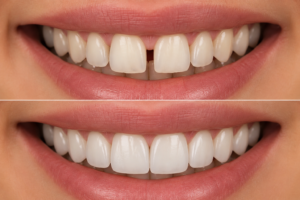
Noticing a gap that’s bothered you for years but unsure if veneers are the right call?
FAQ
No. The scanner wand moves lightly around the teeth with no pressure or material contact.
Digital scans achieve margin accuracy within 20 to 50 microns, well within acceptable prosthodontic tolerance.
Yes, full-arch scans are routine and are used for implant-supported bridges and complete rehabilitation cases.
Most cases reach the lab the same day; crown delivery typically occurs within 5 to 7 working days.