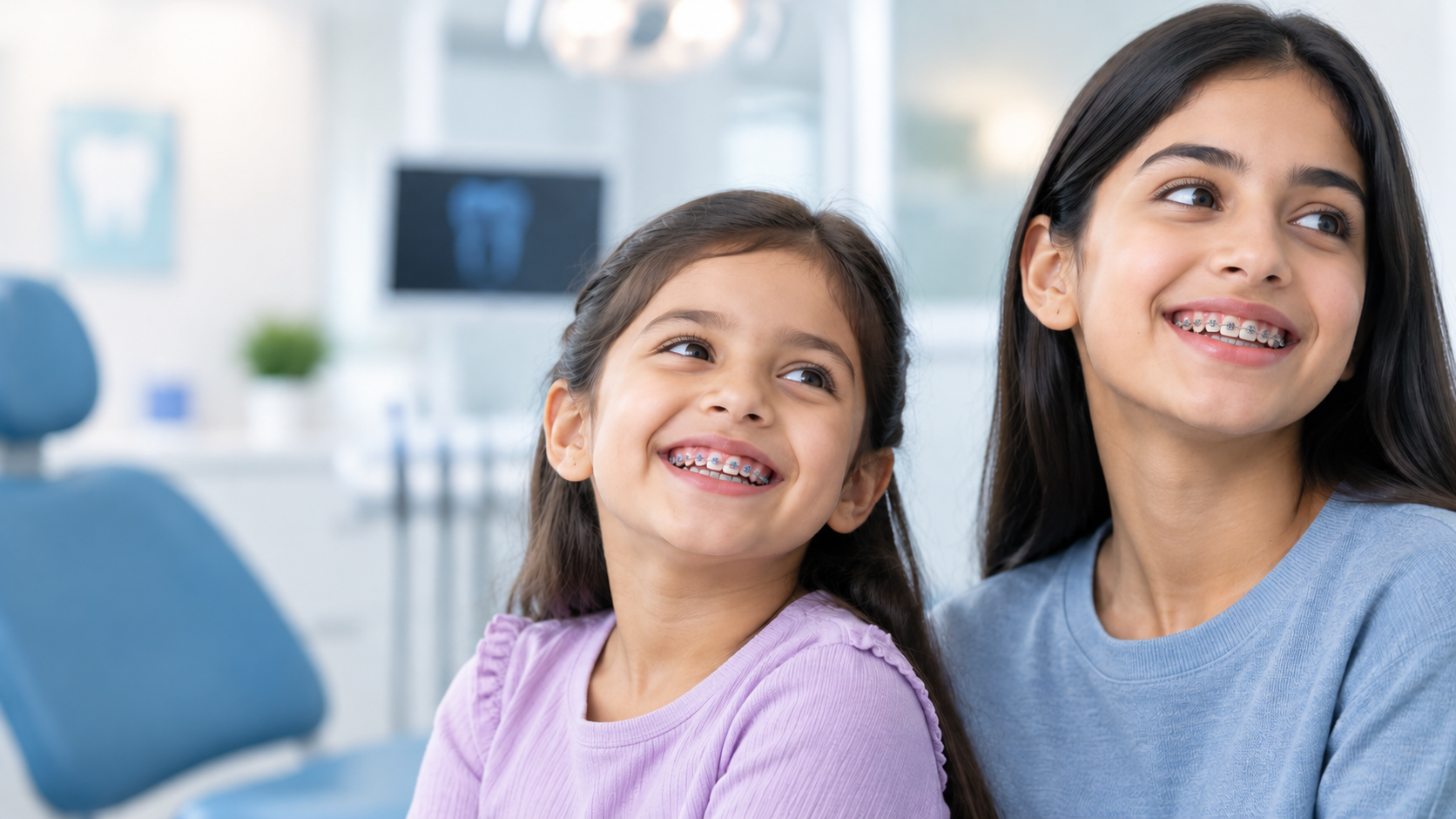
Yes, but only for certain problems. Early braces at age 8 help with a crossbite, a jaw that shifts, or front teeth likely to get knocked, while for many other bite problems waiting until the teens often works as well. “Early braces” usually means a first phase, sometimes an expander or another appliance rather than full braces, followed by a second phase in the teens if it’s still needed. What the orthodontist finds in the mouth decides the timing.
Dr. Madhuri Khoday, orthodontist at Aspire Dental Clinic in Seegehalli, Bangalore, says, “Eight is a good age for a first check-up. We see how the bite and jaws are developing and whether the permanent teeth have room, and only some children need to start treatment then. The rest we watch and begin when the timing is right. A first visit by age 7 is the usual way to find out.”
What Can Early Braces Do That Waiting Can't?
For most children, very little. A few specific problems are the exception.
Crossbite with a jaw shift: When the upper back teeth sit inside the lower ones, the lower jaw can slide sideways to make the teeth meet. A Cochrane review found that expansion plates and the quad-helix, a fixed expander, corrected crossbites in children aged 7 to 11 far more often than no treatment. The American Association of Orthodontists (AAO) adds that a shifting lower jaw can lead to jaw pain.
Front teeth at risk of injury: In trials of children with prominent upper front teeth, 19% of those treated early had new injuries to those teeth, compared with 30% of those who waited until adolescence. For this problem, it was the only clear advantage the review found for starting early.
Habits that keep pushing: Thumb sucking, mouth breathing and abnormal swallowing can all contribute to orthodontic problems, the AAO says. The cause of mouth breathing isn’t always in the mouth, so an ENT opinion may be needed too.
Baby teeth lost too early or too late: The AAO warns that either can cause trouble for the permanent teeth that follow. Space for the permanent front teeth also doesn’t grow with the child, so crowding that is obvious at 8 usually won’t sort itself out.
That mix of baby and permanent teeth is also why age 7–10 matters in early orthodontic treatment.
How Do Early Braces and Teen Braces Compare?
How the two compare depends on the problem being treated.
What each one is for: Early treatment, often called Phase 1, targets a specific problem while the jaws are still growing. Treatment in the teens usually aligns all the permanent teeth in one go, with braces or clear aligners.
Total time in treatment: Early treatment in the research was two-phase, one course at 7 to 11 and another at 12 to 16. For prominent upper front teeth, children who finished both phases ended up with a similar overjet, meaning how far the upper front teeth stick out, to those treated once in adolescence. The evidence was low to moderate in quality.
Removable or fixed appliances: Expansion plates come out of the mouth, so they only work when they’re worn. A quad-helix is fixed, and in the Cochrane review it corrected crossbites more often and in less time than plates.
Waiting with a plan: If the check-up finds nothing that needs early treatment, the orthodontist can follow growth and start once the permanent teeth are in. The AAO says the first exam should settle what treatment is recommended, when it should begin and how long it should take.
Once the permanent teeth are in, the usual route is fixed braces such as Damon braces, which use self-ligating brackets instead of elastic ties.
When Should You See an Orthodontist About Your Child's Teeth?
The AAO recommends a first check-up no later than age 7, so an 8-year-old who hasn’t been seen isn’t late. A chipped or knocked-out permanent tooth needs a dentist the same day. The signs below call for a booked visit rather than waiting for the next routine check.
Chewing, jaw or bite trouble: Painful chewing, a jaw that shifts or clicks, or constant cheek biting suggest the teeth aren’t meeting properly, the AAO notes. Pain when chewing that isn’t from a loose baby tooth is worth a visit soon.
Mouth breathing or snoring: A child who breathes through the mouth most of the time, or snores regularly, should be assessed. An orthodontist can check the bite and jaws, and a pediatrician or ENT doctor may need to look at the nose and throat.
Baby teeth lost at odd times: Teeth lost much earlier or later than usual, or permanent teeth arriving crowded or overlapping, can change the space available.
Habits and protruding front teeth: Thumb or finger sucking that continues while the permanent front teeth come in, or upper front teeth that stick out and get knocked, should be looked at sooner.
Persistent mouth breathing can go together with a narrow upper jaw, a link covered in early childhood braces with emphasis on airway and jaw growth.
Key Takeaway
Early braces at age 8 suit a crossbite with a jaw shift, front teeth at risk of injury, or crowding from badly timed tooth loss. Many other problems can wait for one round of treatment in the teens. A check-up by age 7 settles which applies. For enquiries about a child’s check-up, call +91 73491 02121.
When should your child start braces?
FAQ
No, if there’s a problem like a crossbite or jaw shift; otherwise monitoring may be all that’s needed.
It depends on the problem, but the AAO advises a first check-up by age 7.
Usually not; the AAO says the space for permanent front teeth doesn’t grow with the child.
Not always; early treatment is often followed by a second phase in the teens.